Category: Global Automotive Export / New Energy Industry / Market Analysis
⚡ 1. A Defining Shift: NEVs Become the Engine of China's Auto Export Growth
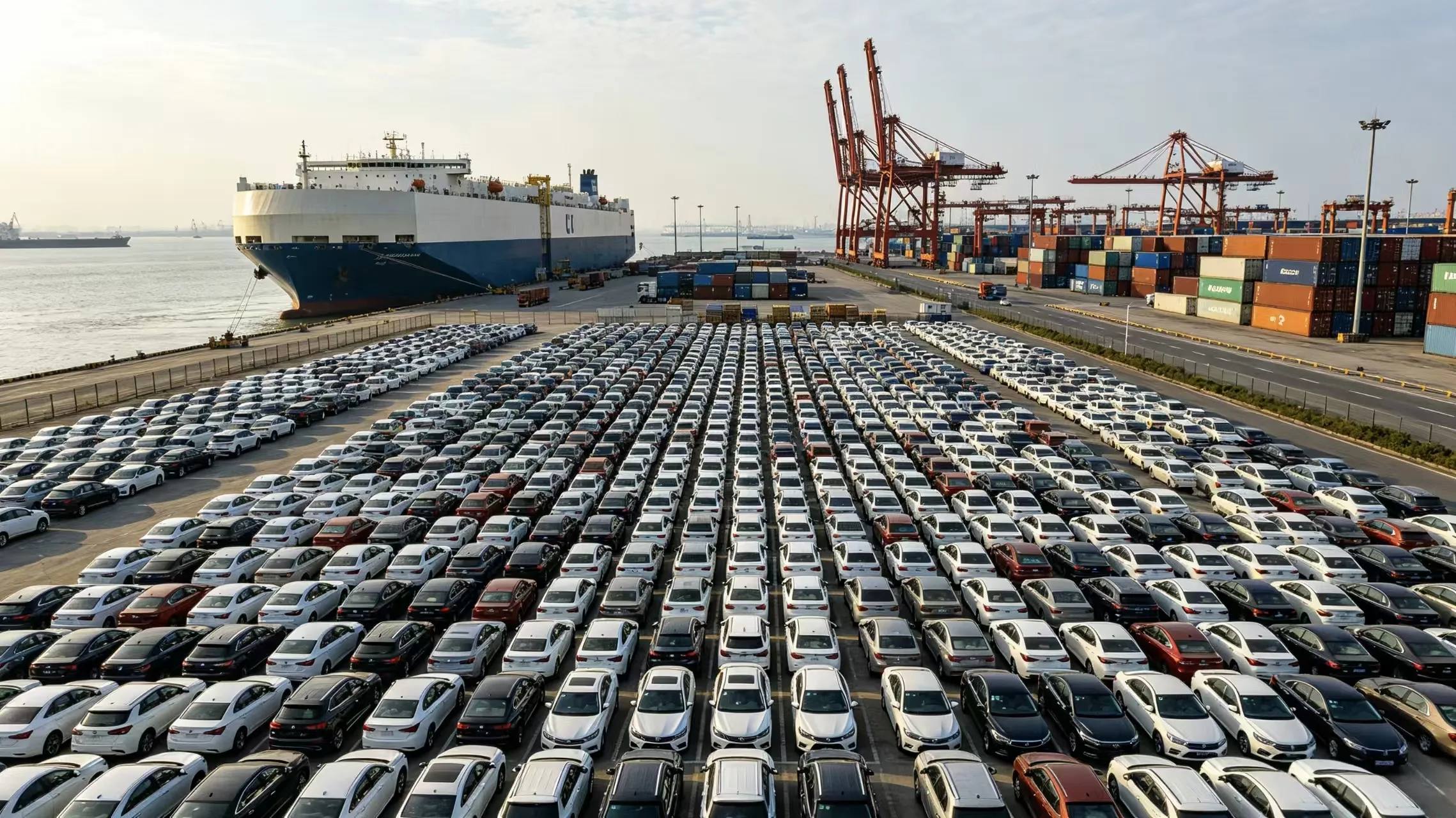
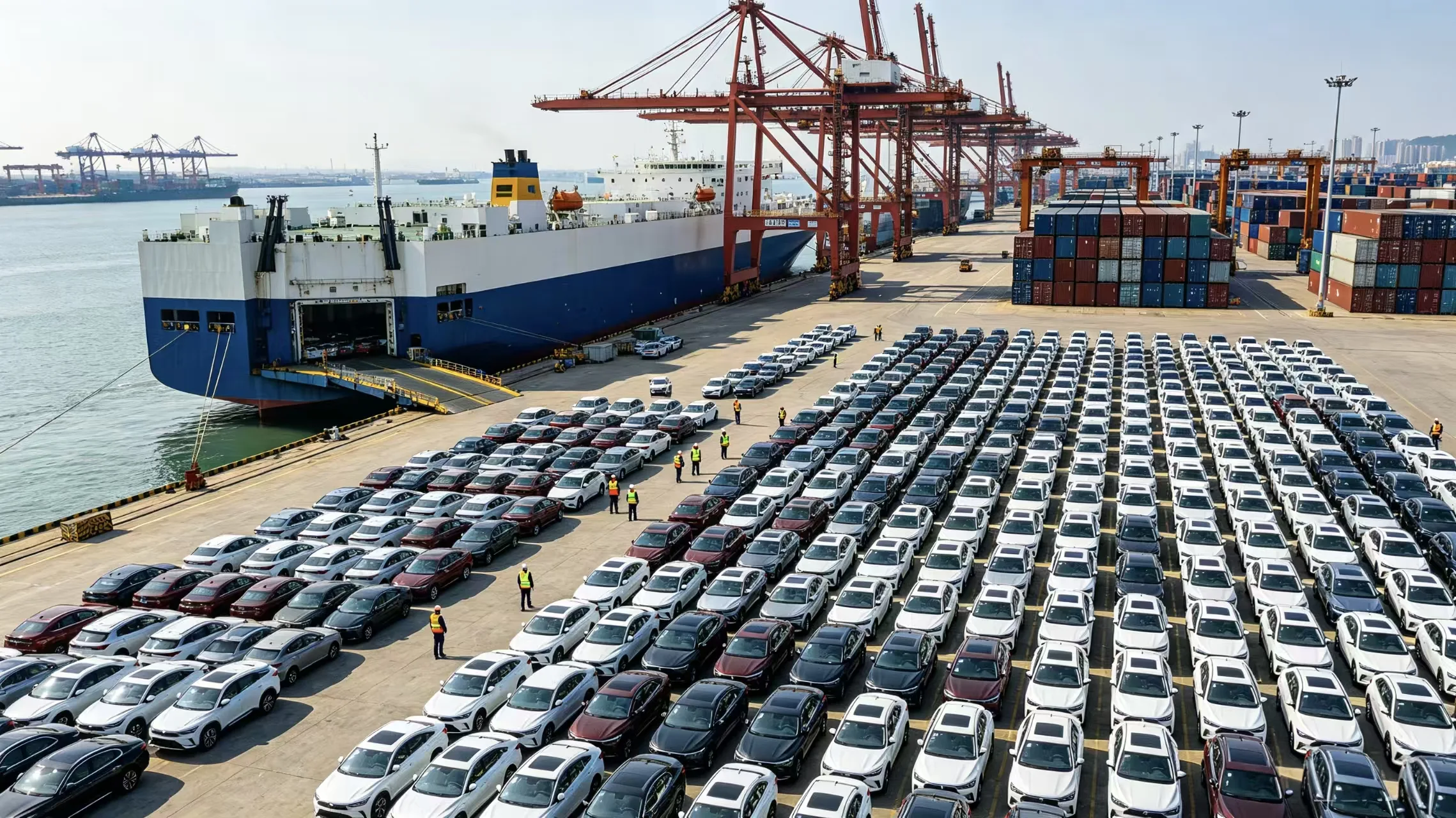
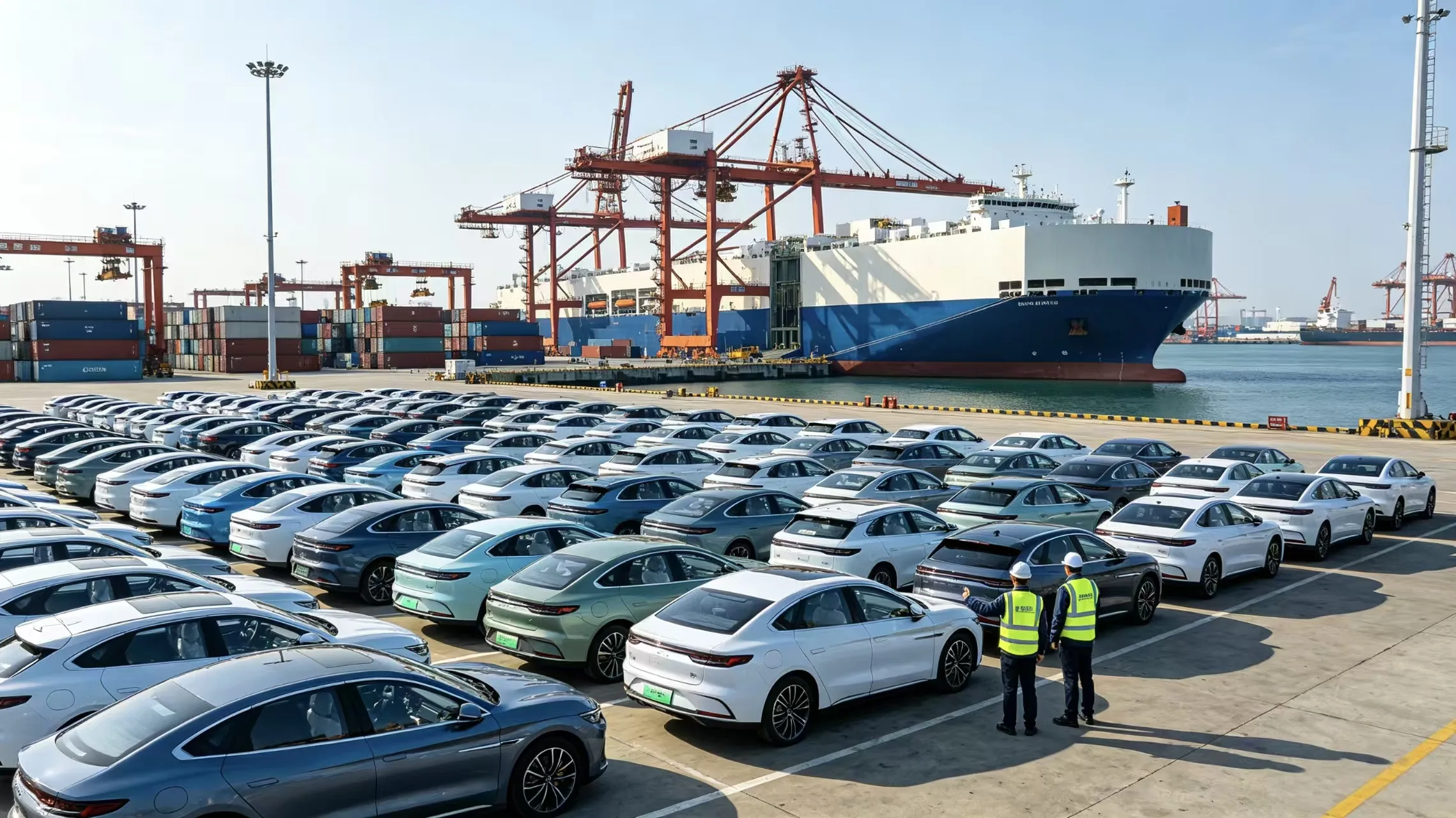
2026 has marked a historic turning point for China's automotive exports. For the first time, new energy vehicles (NEVs) have become the primary engine driving the country's overseas automotive trade growth — not just a growing segment, but the structural core of China's export expansion.
In July 2026 alone, China exported 553,000 new energy vehicles, representing a month-on-month increase of 5.7% and an extraordinary year-on-year surge of 150% (1.5-fold). NEVs accounted for 53% of total vehicle exports in July — meaning more than one out of every two Chinese vehicles shipped overseas is now electrically powered. This marked the second consecutive month that NEV exports exceeded 50% of total exports, following June's 523,000 units (up 160% year-on-year).
For the January-July period, cumulative NEV exports reached 2.909 million units, up 120% year-on-year — a growth rate more than three times that of traditional fuel vehicles (36.2% over the same period). By comparison, traditional fuel vehicle exports reached 3.231 million units in January-July, with July's 490,000 units actually declining 4.6% month-on-month.
Historic Milestone: For two consecutive months, China has exported more electric vehicles than combustion engine vehicles — a structural transformation that no other major auto-exporting nation has ever achieved.
🇪🇺 2. Europe: Breaking Through the World's Most Competitive Market
Europe has emerged as the most significant growth market for Chinese NEV exports, defying both tariff barriers and entrenched brand loyalty.
Market Share Breakthrough
- In the first five months of 2026, Chinese NEVs captured 17.7% of the European EV market — meaning nearly one in six electric vehicles sold in Europe is a Chinese brand.
- In Italy, Chinese NEV market share exceeds 41%.
- In the first half of 2026, Chinese automakers' overall share in Europe reached 9.5%.
- In Western Europe, Chinese EV sales hit fresh highs with 171,800 units sold, and market share increased by 5.0 percentage points year-on-year.
- For the first time, Chinese vehicle share in Europe surpassed that of Japanese brands — a landmark shift driven by China's dominance in electrification while Japanese manufacturers remained focused on hybrid technology.
Leading Exporters to Europe (January-June 2026)
Chery Auto — 262,331 units, up 274.1% year-on-year Chery delivered the most explosive growth in Europe, with exports nearly quadrupling year-on-year. The company's aggressive product lineup and established dealer network across European markets have positioned it as the volume leader among Chinese brands in the region.
SAIC Passenger Vehicles — 211,327 units, up 61.3% year-on-year SAIC's MG brand continues to enjoy strong brand recognition and customer loyalty across Europe, benefiting from its British heritage and early market entry.
BYD Auto — 170,765 units, up 22.9% year-on-year BYD maintained steady growth in Europe despite tariff headwinds, with its Atto 3, Dolphin, and Seal models gaining traction. The company's June exports to the EU+UK+EFTA region alone reached 54,085 units.
Geely Auto — 93,203 units, up 134.4% year-on-year Geely achieved more than double its European exports year-on-year, entering seven European markets within just 45 days — including Germany, Spain, the Netherlands, and France. Its Geely E5 (EX5) and STARRAY EM-i models have been well received.
Leapmotor — 61,319 units Leapmotor, through its partnership with Stellantis, has rapidly expanded its European presence, leveraging the partnership's established distribution network.
The UK Advantage: The United Kingdom, which has declined to follow the EU's lead in imposing additional tariffs on Chinese EVs, remains the largest single European market for Chinese cars.
🌏 3. A Multi-Polar World: Diversified Market Expansion Beyond Europe
While Europe captures headlines, Chinese NEV exports are achieving remarkable growth across a diversified global landscape.
Southeast Asia: The Largest Single NEV Export Market
- Thailand has become China's largest single NEV export market, with imports exceeding 450,000 units in 2025, driven by government EV subsidy policies and strong consumer adoption.
- Indonesia, Vietnam, and Malaysia are following Thailand's trajectory, with growing middle classes and government support for electrification.
- Leapmotor's Southeast Asian exports surged 302.1% in the first half of 2026, illustrating the region's explosive growth potential.
- NEVs account for 46% of China's vehicle exports to Southeast Asia.
Middle East: Energy Transition Creates New Demand
- Saudi Arabia and the UAE are actively advancing energy transition strategies, creating rapidly growing demand for Chinese NEVs.
- In Jordan, Chinese EVs from BYD (Dolphin, ATTO 3), XPENG, Changan, and Dongfeng have gained strong consumer favor, with dealerships in Amman reporting bustling customer traffic.
- High-temperature environment adaptation has become a key differentiator, and Chinese manufacturers have invested in thermal management technologies suited to desert climates.
- BYD, NIO, and XPENG have all established sales networks in the region, while CATL has deployed both energy storage and power battery operations.
Latin America: Explosive Growth in Emerging Economies
- Geely's exports to Central and South America surged 445.6% in the first half of 2026 — the fastest-growing region for the brand.
- The Geely Xingyuan (Starray) has been particularly successful in Brazil, where it sells at 160,000-180,000 RMB — significantly higher than its domestic price, with overseas gross margins substantially above domestic levels.
- NEVs account for 79% of China's vehicle exports to the Southern Hemisphere, reflecting the strong adoption of electrification in Latin American and African markets.
Africa: Long-Term Potential Unfolding
- China's used car market share in Africa rose from 1.2% in 2020 to 3.8% in 2024, with significant room for further growth.
- Kenya's electric bus adoption and Angola's low-tariff policies represent specific forward-looking opportunities for NEV penetration.
- Chinese manufacturers are beginning to deploy EV charging infrastructure and after-sales support networks across key African markets.
🏆 4. Leading the Charge: Champion Brands and Star Models
The NEV export boom is being driven by a cohort of Chinese automakers achieving record overseas volumes, supported by globally competitive products.
BYD: The Global NEV Pioneer
- July 2026 exports: 180,538 units, up 124.3% year-on-year
- Exports accounted for 43% of BYD's total monthly sales
- The BYD Yuan UP was the single best-selling export model across all Chinese automakers in July, with 43,860 units — the only model to exceed 40,000 units in a single month
- BYD has licensed its e-Platform 3.0 to Toyota and its blade battery technology to Hyundai
- Seven ASEAN countries have adopted BYD's EV charging standard
- BYD's Hungary manufacturing plant commenced production in Q2 2026, with long-term annual capacity of 300,000 units
Geely: The Fastest-Growing NEV Exporter
- July 2026 exports: 106,663 units, up 202% year-on-year — a new all-time high
- NEV exports surged 616% year-on-year — the most explosive growth among major Chinese automakers
- The Geely Xingyuan (Starray) exported 22,000 units in July and 87,000 units in the first half, accounting for over 40% of the brand's total exports
- Geely's overseas gross margins are significantly higher than domestic, with the Xingyuan selling at premium prices in markets like Brazil
- Geely entered seven European markets within 45 days, demonstrating rapid market penetration capability
Chery: The Consistent Export Leader
- July 2026 exports: 202,533 units — the highest among all Chinese automakers
- Exports accounted for 73% of Chery's total monthly sales — the highest export dependency ratio
- Chery's European exports surged 274.1% in the first half of 2026
- Through a joint venture with Spanish automaker EBRO, Chery plans to begin production at the former Nissan factory in Barcelona in late 2026 or early 2027, targeting 150,000 units annual capacity by 2029
🔋 5. The Competitive Edge: Why Chinese NEVs Are Winning Globally
The extraordinary growth of Chinese NEV exports is not accidental — it is built on fundamental competitive advantages that are difficult for competitors to replicate.
Complete "Three-Electric" Technology Dominance
The core of China's NEV competitiveness lies in the mature, vertically integrated "three-electric" system — battery, motor, and electronic control:
- Battery Technology: BYD's second-generation blade battery represents a breakthrough in both material and structural innovation, paired with an all-temperature intelligent thermal management system that optimizes range, safety, and heat dissipation performance. CATL continues to lead global battery innovation with next-generation technologies.
- Technology Licensing: Chinese NEV technology is being adopted by global legacy automakers — BYD has licensed its e-Platform 3.0 to Toyota and blade battery technology to Hyundai. XPENG has supplied its second-generation autonomous driving system and self-developed Turing AI chip to Volkswagen for global deployment.
- Standard Setting: Seven ASEAN countries have adopted BYD's EV charging standard, demonstrating Chinese technology's growing influence in global standard-setting.
Intelligent Experience as a Differentiator
Chinese NEVs offer intelligent features that many competing vehicles in the same price segment cannot match:
- Large-screen infotainment systems with fluent voice control
- Advanced driver assistance systems (ADAS) validated through China's massive domestic market
- Over-the-air (OTA) software updates that continuously improve vehicle capabilities
- Smart cockpit experiences that integrate navigation, entertainment, and vehicle control seamlessly
These features, developed and refined through China's intensely competitive domestic market, represent a significant value proposition for global consumers — particularly in segments where traditional automakers have been slow to innovate.
The Complete Industrial Chain Advantage
China possesses the world's most comprehensive NEV supply chain, spanning from lithium processing and battery cell manufacturing to electric motor production, electronic control systems, and intelligent connected vehicle technologies. This end-to-end ecosystem provides:
- Unmatched cost efficiency through vertical integration and economies of scale
- Production flexibility that enables rapid response to market demand shifts
- Faster product iteration cycles, with new models and technology updates reaching market more quickly than competitors
- Supply chain resilience that reduces dependency on foreign component suppliers
Cost-Performance That Resonates Globally
Chinese NEVs offer industry-leading range, intelligent features, and build quality at price points that traditional automakers cannot match. This value proposition has proven compelling across diverse markets — from cost-conscious consumers in Southeast Asia and Latin America to early adopters in Europe and the Middle East.
🏭 6. From Export to Localization: Building Global Manufacturing Roots
As NEV export volumes grow, Chinese automakers are accelerating the transition from pure product export to localized manufacturing — a strategic evolution that deepens market presence and navigates trade barriers.
European Manufacturing Footprint
- BYD Hungary: Commenced production in Q2 2026, with long-term annual capacity of 300,000 units. BYD is also in negotiations with Stellantis and other automakers to take over underutilized European factories.
- Chery Spain: Through a joint venture with EBRO, production is scheduled to begin at the former Nissan factory in Barcelona in late 2026 or early 2027, targeting 150,000 units annual capacity by 2029.
- Geely: Leveraging its existing European manufacturing assets through Volvo and other holdings, while exploring additional brownfield opportunities.
Emerging Market Manufacturing
- Brazil: Chery operates a plant with 150,000 units annual capacity, while Great Wall Motors is building a new 200,000-unit factory, both developing local supply chain ecosystems.
- Thailand: Multiple Chinese automakers have established manufacturing operations in Thailand's Eastern Economic Corridor, benefiting from government incentives and access to ASEAN markets.
- Middle East: BYD, NIO, and XPENG have established sales and service networks, with CATL deploying both energy storage and power battery operations to support the region's energy transition.
Strategic Evolution: The shift from "selling cars from China" to "building cars in-market" represents a maturation of Chinese automakers' global strategy — creating local jobs, navigating tariff barriers, and building deeper, more sustainable market relationships.
📈 7. Outlook: Sustained Momentum Through 2026 and Beyond
Based on the current trajectory, China's NEV export boom shows no signs of slowing:
- At the January-July pace of 2.909 million units, full-year 2026 NEV exports are on track to exceed 5 million units — a figure that would have been unimaginable just a few years ago.
- NEV export growth (120% year-on-year) continues to vastly outpace traditional fuel vehicle growth (36.2%), ensuring that NEVs will account for an ever-larger share of total exports.
- The structural shift toward electrification in global automotive markets, driven by tightening emissions regulations, energy security concerns, and growing consumer acceptance, continues to expand the total addressable market for Chinese NEVs.
- Ongoing investments in overseas manufacturing, charging infrastructure, and after-sales service networks are laying the foundation for sustainable, long-term growth rather than temporary export surges.
🚀 8. Conclusion: Electrification as China's Global Automotive Calling Card
The 2026 NEV export boom represents more than impressive sales numbers — it represents the realization of China's strategic vision to lead the global automotive industry's transition to electrification. What began as a domestic policy push has evolved into a global competitive advantage, with Chinese NEVs now setting the benchmark for value, technology, and intelligent experience in markets across every continent.
From Europe's most competitive showrooms to the emerging cities of Southeast Asia, from the energy-transforming nations of the Middle East to the fast-growing economies of Latin America, Chinese new energy vehicles are not merely entering global markets — they are reshaping them. The combination of complete industrial chain dominance, breakthrough three-electric technology, industry-leading intelligent features, and accelerating localization investment positions Chinese NEVs as the defining automotive force of the 2020s and beyond.
The Bottom Line: New energy vehicles have become the core driving force of China's 2026 overseas automotive trade growth — and this is only the beginning. As electrification accelerates globally, Chinese NEVs are poised to lead not just in export volume, but in defining the future of mobility for consumers worldwide.