Category: Automotive Export | Intelligent Cockpit | Overseas Marketing
1. Beyond Hardware: How Intelligence Redefines the Chinese Vehicle Advantage
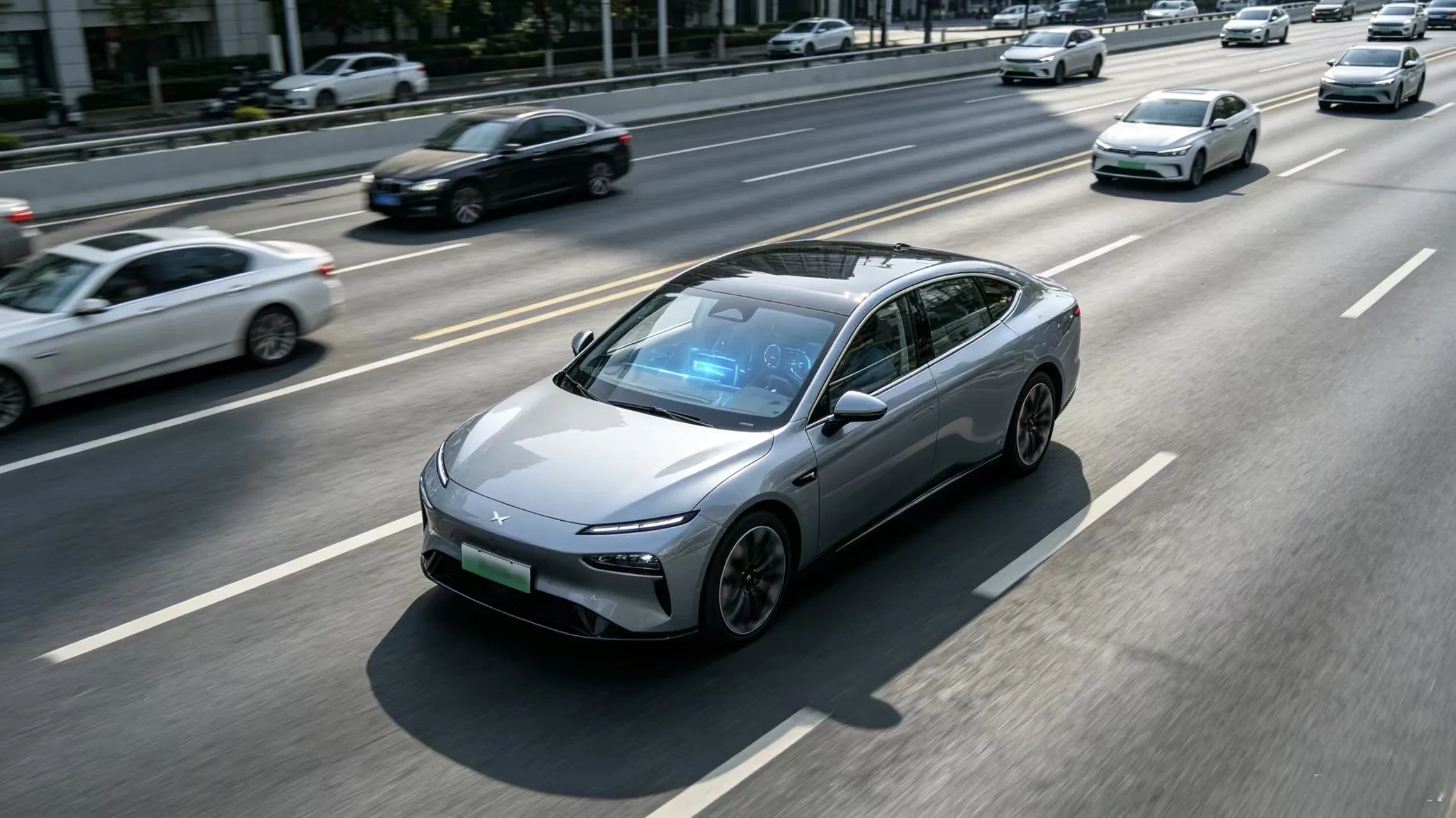
For decades, automotive competition centered on engine performance, build quality, and brand heritage. Today, a new dimension has emerged as the defining differentiator: the intelligent experience. Chinese automakers have rapidly established global leadership in this domain, transforming vehicles from mechanical machines into software-defined, AI-powered smart devices on wheels.
The numbers tell a compelling story of China's intelligent driving leadership:
- L2 combined assisted driving penetration in Chinese passenger vehicles reached 70.5% in 2026, according to the Ministry of Industry and Information Technology
- Navigation-assisted driving (NOA) penetration hit 34.2% — meaning more than one in three new vehicles sold in China can autonomously navigate on highways and city streets
- L2+ level (including NOA) new vehicle penetration exceeded 60% in 2025, corresponding to 20.64 million intelligent connected vehicles
- ADAS in new energy passenger vehicles reached 78.4% in 2025
- Urban NOA installations in the first half of 2026 totaled 1.802 million units, with monthly installations growing from 253,000 in January to 408,000 in June
Global Comparison: Boston Consulting Group estimates that in 2025, L2+ penetration rates were China 10%, the United States 6%, Europe 1%, and Japan 1%. China's lead in intelligent driving adoption is not marginal — it is generational.
🚗 2. The Intelligent Driving Revolution: From Highways to City Streets
Intelligent driving is the centerpiece of China's vehicle intelligence advantage, with Chinese automakers and technology companies pushing the boundaries of what is possible — and making it accessible at price points that were once unimaginable.
Urban NOA: Autonomous Driving in Complex Environments
Urban NOA (Navigate on Autopilot) represents the most technically challenging frontier of assisted driving — navigating complex city streets with pedestrians, cyclists, construction zones, and unprotected turns. Chinese companies have achieved remarkable progress:
- XPeng XNGP: Achieved "nationwide map-free navigation" covering over 200 cities, with a 92% success rate for unprotected left turns. Beginning in 2026, all Volkswagen China electric vehicles will be equipped with XNGP — marking the first large-scale adoption of a Chinese intelligent driving solution by a global automaker.
- Huawei Qiankun ADS: With 745,000 vehicles equipped and approximately 28% market share, Huawei leads the urban NOA market. Its ADS system is deployed across AITO, Luxeed, and Stelato models, featuring dual 896-line image-grade LiDARs, 11 HD cameras, and 5 millimeter-wave radars.
- Li Auto AD Max: Users average 47.3 minutes of daily highway NOA usage — the highest in the industry — demonstrating genuine customer trust and daily dependence on the system.
- BYD DiPilot / God's Eye: BYD has made L2+ assisted driving standard across its entire lineup, with its "God's Eye" high-end intelligent driving system now available in vehicles starting at the 150,000 RMB price point.
LiDAR: Chinese Sensors Powering Global Perception
The hardware behind intelligent driving is also increasingly Chinese. Hesai Technology, according to Yole Group's 2026 Automotive ADAS report, holds 43% of the global ADAS main LiDAR shipment market share — ranking first worldwide. Chinese LiDAR manufacturers have driven down costs while increasing resolution, making advanced perception hardware accessible to mass-market vehicles.
Flagship vehicles like the AITO M9 feature unprecedented sensor configurations: dual forward redundant LiDAR matrix, four solid-state LiDARs for omnidirectional coverage, one 896-line dual-path image-grade LiDAR, three distributed 4D millimeter-wave radar arrays, and multiple HD cameras — creating a 360-degree, multi-layered perception bubble around the vehicle.
The Safety Commitment: BYD's Industry First
In a landmark move, BYD became the world's first automaker to pledge full damage coverage for both intelligent parking and urban NOA — backed by its self-developed 4nm automotive driving SoC, the XUANJI A3. This commitment transforms intelligent driving from a "use at your own risk" feature into a manufacturer-guaranteed capability — a powerful signal of confidence in system reliability.
🖥️ 3. The Intelligent Cockpit: A Smartphone Experience on Wheels
If intelligent driving transforms how the car moves, the intelligent cockpit transforms how passengers interact with the vehicle. Chinese automakers have created cabin experiences that rival — and in many cases surpass — the most advanced luxury vehicles from traditional automakers.
Flagship Chips Powering Seamless Performance
The Qualcomm Snapdragon 8295 chip — once reserved for flagship luxury vehicles — has become standard equipment across a wide range of Chinese vehicles, even appearing in the 100,000 RMB segment. The Leapmotor A05, starting at 63,900 RMB, became the first vehicle in its class to feature the 8295 chip. Higher-end models use the Snapdragon 8295P with 5nm process, 30 TOPS AI computing power, 24GB RAM, and 256GB storage — billed as "the most powerful brain in the automotive industry," capable of 5-10 years of OTA updates without lag.
Immersive Displays and Audio
Chinese vehicles have redefined the cabin display experience:
- 14.6-inch 2.5K ultra-clear central screens have become mainstream
- 29-inch 6K front panoramic displays appear in premium models like the Li Auto L8
- Dual-screen and triple-screen configurations provide dedicated displays for driver, passenger, and rear-seat entertainment
- 12-speaker 7.1-channel audio systems with microphone-free karaoke and AI call noise reduction create a premium acoustic environment
- 27-speaker star-ring theater systems in flagship models deliver concert-level sound quality
AI Large Models: The Voice Assistant That Understands You
The most transformative cockpit innovation is the integration of AI large language models, turning voice commands from rigid keyword recognition into natural, conversational interaction:
- Tongyi Qianwen (Alibaba), Doubao (ByteDance), and Baidu + Volcano Engine dual AI models power next-generation cabin assistants
- Multimodal interaction supports voice, gesture, and visual commands simultaneously
- Dialect recognition covers Sichuanese, Cantonese, and eight other major Chinese dialects — a capability unmatched by global competitors
- Four-zone voice recognition allows independent control from front and rear seats
- Navigation AI agents understand fuzzy expressions like "the coffee shop near the airport," automatically correct speech errors, and plan optimal routes
- Ten-command mixed speech allows users to issue multiple instructions in a single sentence without waiting for confirmation
The voice interaction ecosystem is dominated by Chinese suppliers — iFlytek and AISpeech together claim nearly 70% of the market, with the top five suppliers holding over 90%. Their expertise in multilingual support, dialect adaptation, and large-model interaction is precisely the capability Chinese vehicles are leveraging to win global customers.
🔗 4. Cockpit-Driving Fusion: The Next Frontier of Intelligence
The most advanced frontier of vehicle intelligence is the fusion of cockpit and driving systems into a unified intelligent agent. In April 2026, Geely unveiled China's first cockpit-driving fusion super intelligent agent, debuting on the ZEEKR 8X.
This technology represents a paradigm shift: when you issue a voice command in the cabin, the car does not merely adjust music or set a destination — it coordinates a complete behavioral response involving navigation adjustments, driving style changes, and cabin climate control in a single fluid interaction. Geely describes this as an experience where "dialogue translates directly into action."
The hardware architecture supports this fusion at multiple levels:
- H7 configuration: Single Thor chip with 30+ sensing elements, targeting mass production and supporting L2 assisted driving
- H9 configuration: Dual Thor chips delivering 1,400 TOPS computing power, five LiDAR units achieving triple 360-degree coverage, designed for L3 functions and Robotaxi operations
Meanwhile, Li Auto's VLA (Vision-Language-Action) based command function, launched in September 2025, makes language a new interface for driving control — upgrading the car from a tool that passively executes instructions to an autonomous driving partner that can understand, think, and act.
💰 5. The Democratization of Intelligence: Premium Features at Mass-Market Prices
Perhaps the most significant aspect of China's intelligent vehicle advantage is the rapid democratization of advanced technology. Features that were exclusive to 500,000+ RMB luxury vehicles just a few years ago are now available at 150,000 RMB — and in some cases, below 100,000 RMB.
- Urban NOA: Once limited to flagship models above 400,000 RMB, now available in the 150,000-200,000 RMB segment, with BYD's "God's Eye" system leading the downward penetration
- Qualcomm 8295 chip: Now standard in vehicles starting at 63,900 RMB (Leapmotor A05)
- LiDAR: Appearing in vehicles below 150,000 RMB, with Chinese sensor manufacturers driving cost reductions
- Automatic parking (APA): Penetration exceeds 45%, now covering all vehicles above 100,000 RMB
- AI large model voice assistants: Standard across most new energy vehicles from 100,000 RMB upward
This democratization is driven by intense domestic competition that has pushed the upper limits of experience while driving down the cost of intelligence. These capabilities, honed in the world's largest and most competitive auto market, are now available to global buyers at price points that traditional automakers cannot match.
🤝 6. What the Intelligent Experience Means for Global Buyers
For international distributors, dealers, fleet operators, and consumers, the intelligent experience of Chinese vehicles delivers concrete, measurable advantages:
For Distributors and Dealers:
- A powerful selling proposition that differentiates Chinese vehicles from competitors in the same price segment
- Features that generate genuine customer excitement and word-of-mouth — intelligent driving, AI voice assistants, and immersive cabins are conversation starters
- Over-the-air (OTA) update capability means vehicles improve over time, creating ongoing customer engagement and brand loyalty
- Comprehensive documentation and multilingual support for intelligent features facilitate market adaptation
For Fleet and Commercial Customers:
- Intelligent driving assistance reduces driver fatigue and improves safety on long routes
- Predictive maintenance and connected vehicle features optimize fleet operations and reduce downtime
- Lower total cost of ownership as intelligent features reduce accident rates and maintenance costs
- Software-defined architecture allows fleet-specific customization through configuration rather than hardware changes
For End Consumers:
- A driving experience that feels years ahead of comparably priced vehicles from traditional brands
- Natural, conversational voice control that works in multiple languages and dialects
- Advanced driver assistance that makes daily commuting less stressful and safer
- A cabin that functions as a connected entertainment, productivity, and relaxation space
- Continuous improvement through OTA updates — the vehicle gets better after you buy it
🚀 7. Conclusion: Intelligence as the New Global Competitive Moat
The global automotive industry is undergoing a fundamental redefinition of value. Where horsepower and leather seats once defined luxury, today's customers increasingly judge vehicles by the quality of their intelligent experience — how well the car drives itself, how naturally it understands your voice, how seamlessly it connects to your digital life, and how much it improves over time through software updates.
Chinese automakers have not merely participated in this transformation — they have led it. With L2 assisted driving in 70.5% of new vehicles, urban NOA coverage expanding to every city, AI large model voice assistants understanding natural language and dialects, and flagship-grade intelligent features democratized to mass-market price points, Chinese vehicles offer an intelligent experience that is genuinely differentiated in the global marketplace.
The Bottom Line: When global buyers choose Chinese vehicles, they are not just choosing affordable transportation — they are choosing a software-defined, AI-powered intelligent experience that redefines what a car can be, and that improves with every over-the-air update.