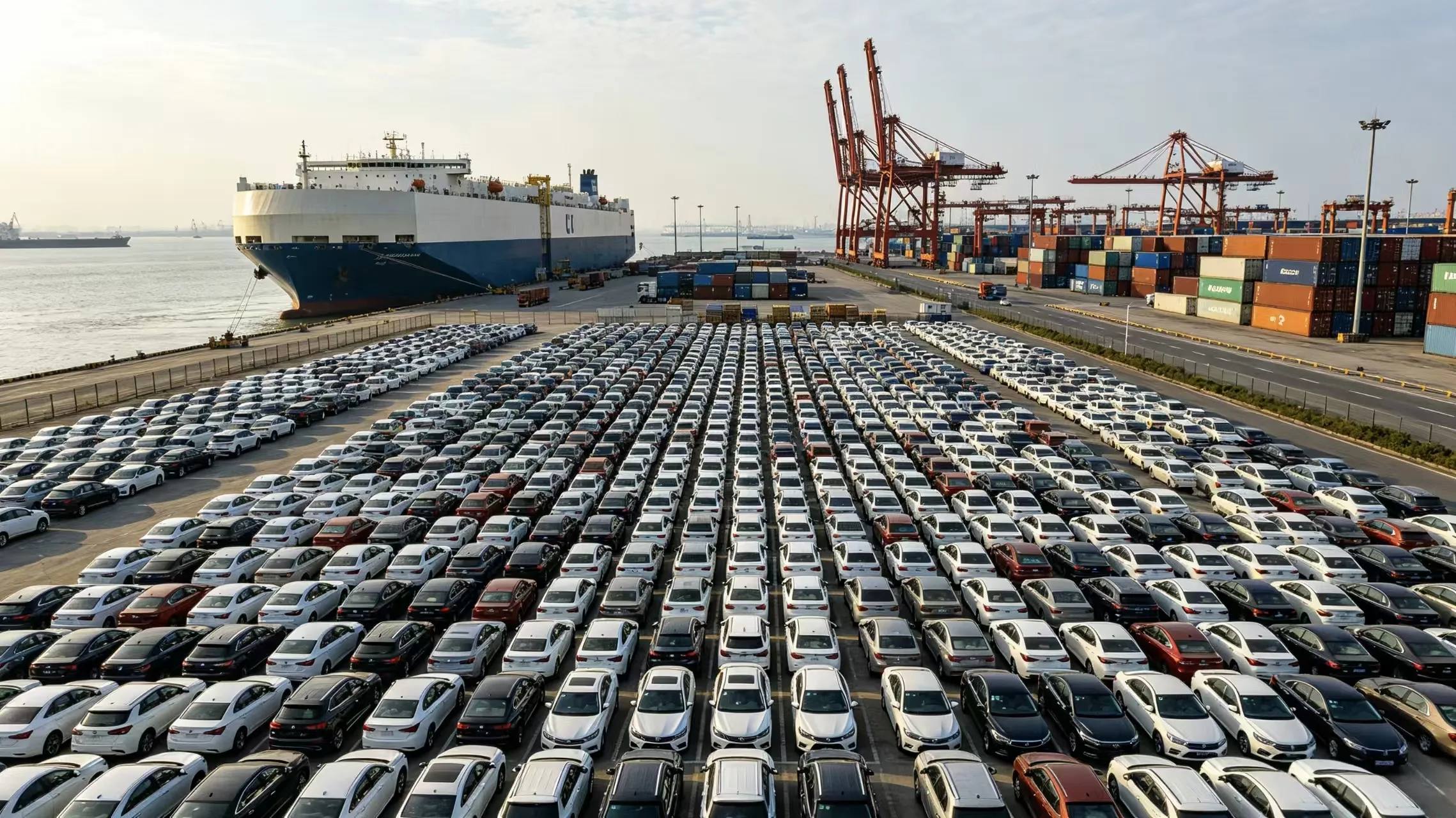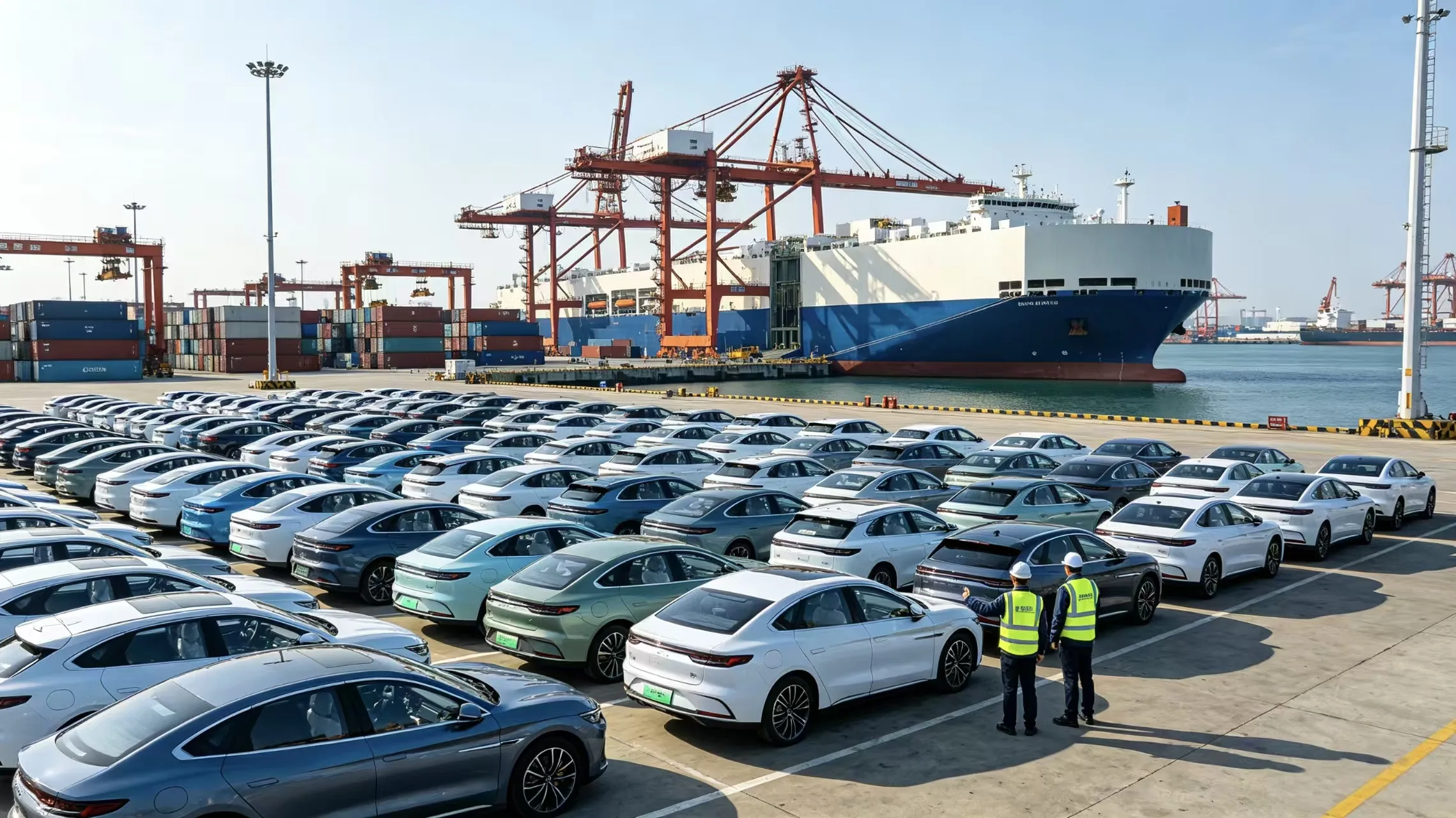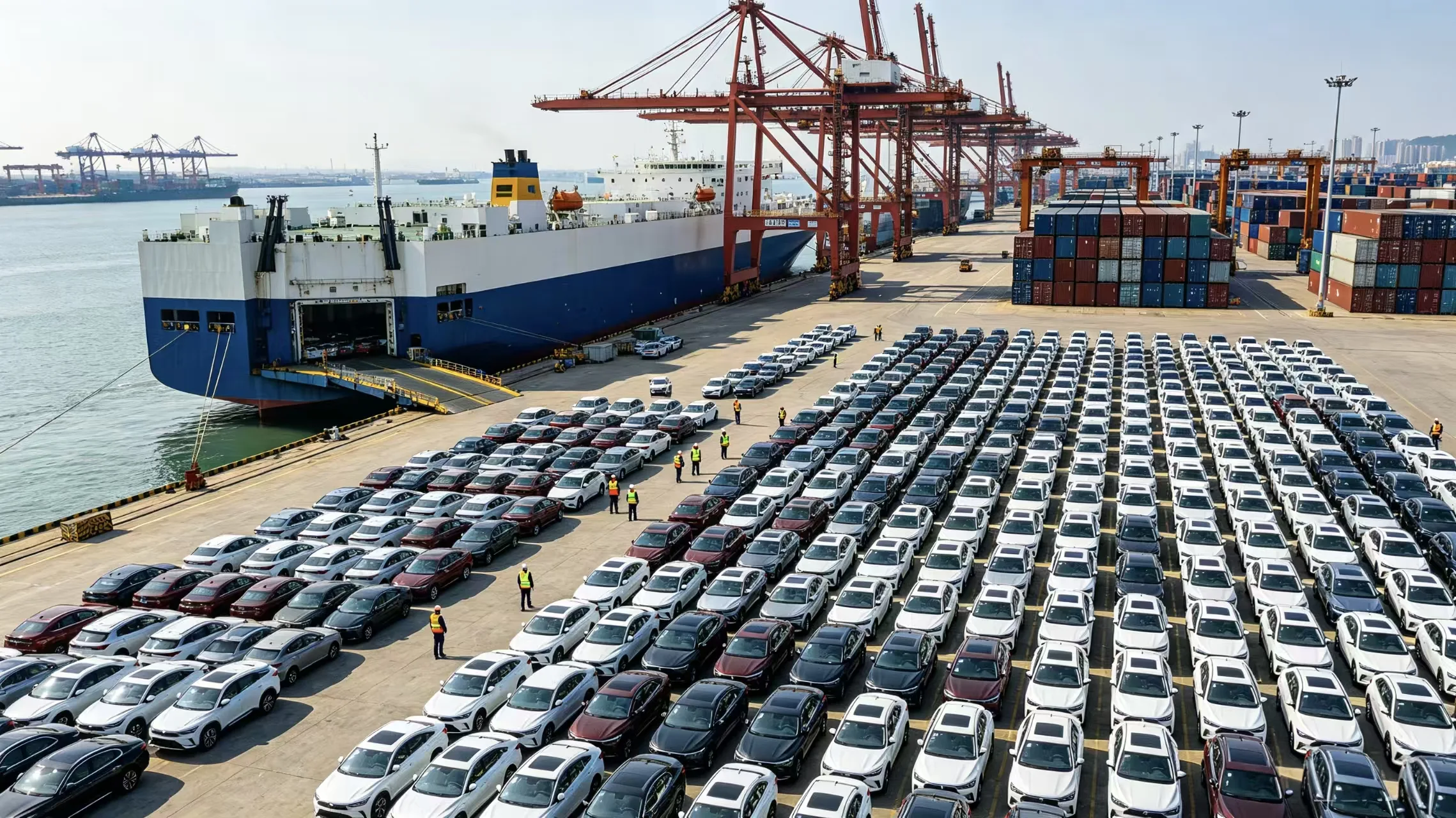
Global Automotive Industry / Used Car Export / Market Analysis
🚗 1. From Pilot Project to Global Force: The Rise of China's Used Car Exports
China's used car export industry has undergone a remarkable transformation since the launch of the pilot program in 2019. What began as a modest experiment has evolved into one of the fastest-growing segments of China's automotive foreign trade, driven by the country's vast vehicle parc of 359 million units, a mature supply chain, and increasingly sophisticated quality control systems.
The growth trajectory tells a compelling story:
- 2020: 4,300 units exported — the industry's first full year
- 2022: 60,000+ units — early acceleration phase
- 2023: 150,000 units — triple-digit growth
- 2024: 436,000 units — a 46.5% year-on-year increase, covering over 160 countries and regions
- 2025: 550,000–600,000 units — new energy vehicles exceeding 30% of exports for the first time
- 2026 H1: 325,000 units exported, valued at $7.6 billion, representing year-on-year growth of 61% in volume and 54% in value
- 2026 full-year forecast: 750,000–850,000 units
Industry Insight: In just six years, China's used car export volume has grown from less than 5,000 units to a projected 800,000+ units — a more than 160-fold increase. This explosive growth reflects both the maturation of China's domestic used car market and the rising global demand for affordable, high-quality pre-owned vehicles.
📋 2. Policy-Driven Standardization: Building Trust Through Regulation
The rapid growth of used car exports has been accompanied by a deliberate policy framework designed to ensure quality, compliance, and long-term industry sustainability. The Chinese government has moved proactively to transform the sector from volume-driven expansion to quality-driven development.
The 2026 180-Day Rule: Raising the Compliance Bar
In November 2025, four ministries — the Ministry of Commerce, Ministry of Industry and Information Technology, Ministry of Public Security, and General Administration of Customs — jointly issued the Notice on Further Strengthening the Administration of Used Car Exports. Key provisions effective January 1, 2026 include:
- 180-Day Registration Requirement: Vehicles exported within 180 days of initial registration must be accompanied by an After-Sales Service Confirmation Document issued by the manufacturer, specifying export destination, vehicle information, and authorized service network details, bearing the manufacturer's official seal.
- Standardized License Applications: Declared information must match the Motor Vehicle Registration Certificate exactly; inconsistencies result in license rejection.
- Enterprise Dynamic Management: A qualification review and exit mechanism ensures only compliant, capable enterprises remain in the export business.
- Negative List for Dishonest Practices: Seven categories of violations — including false vehicle condition reporting and non-compliant export operations — trigger penalties and potential qualification revocation.
This regulatory framework effectively links export eligibility to manufacturer-backed after-sales responsibility, ensuring that every exported vehicle comes with verifiable service support.
National Quality Standards: Ensuring Vehicle Condition
China has established formal national industry standards for used car export quality:
- WM/T 8-2022: Quality Requirements for Exported Used Passenger Vehicles
- WM/T 9-2022: Quality Requirements for Exported Used Commercial Vehicles and Trailers
These standards mandate comprehensive inspection of safety performance, technical condition, appearance, interior, and functional components. Only vehicles passing inspection by qualified third-party institutions may be exported.
Third-Party Inspection: Independent Quality Verification
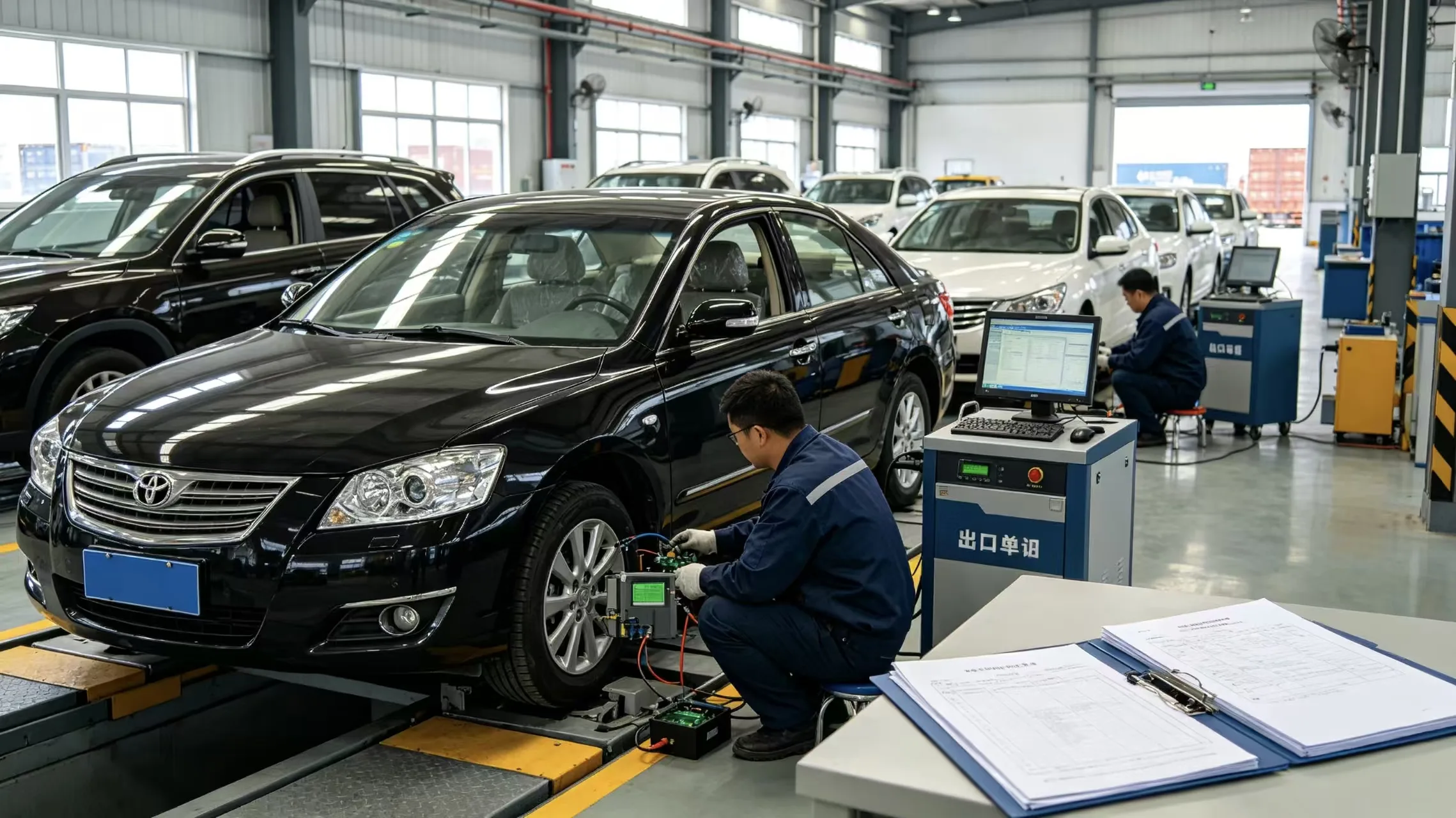
All exported vehicles must undergo inspection by institutions holding CMA (China Metrology Accreditation) and CNAS (China National Accreditation Service) qualifications. Inspectors issue formal Used Car Export Quality Inspection Reports covering:
- Safety systems (brakes, steering, airbags, tires)
- Powertrain condition (engine, transmission, battery for EVs)
- Electrical and electronic systems
- Body and chassis integrity
- Mileage verification
- Emissions compliance
Vehicles failing inspection are eliminated from the export pipeline — ensuring that only roadworthy, accurately represented vehicles reach international buyers.
🔧 3. The Standardized Export Process: Seven Steps to Global Delivery
A well-defined, standardized export workflow ensures consistency, transparency, and quality at every stage — from vehicle acquisition to port delivery.
Step 1: Vehicle Sourcing and Acquisition
Export enterprises source vehicles through authorized dealer networks, auctions, and direct acquisitions. Strict acquisition rules prohibit salvage vehicles, assembled/rebuilt vehicles, and vehicles under mortgage or customs supervision. Complete ownership documentation is verified before purchase.
Step 2: Professional Reconditioning
Acquired vehicles undergo professional reconditioning in accordance with WM/T 8-2022 standards. This includes exterior paint correction, interior detailing, mechanical servicing, safety component verification, and functional system checks. The goal is to bring every vehicle to a consistent, presentation-ready condition.
Step 3: Third-Party Quality Inspection
Reconditioned vehicles are submitted to CMA/CNAS-accredited inspection institutions for comprehensive testing. Inspectors generate detailed condition reports with photographic documentation. Only vehicles receiving a Qualified Inspection Report proceed to export licensing.
Step 4: Ownership Transfer and Export Licensing
Vehicles undergo transfer registration, with the Motor Vehicle Registration Certificate endorsed as "Transferred Pending Export." Original license plates and registration documents are surrendered. Export enterprises then apply for the Used Car Export License through the Ministry of Commerce system, with all declared information verified against registration records.
Step 5: Destination Market Certification
Before shipment, vehicles obtain all required destination market certifications — completed pre-shipment to avoid port detention:
- Middle East: SASO / GSO conformity certificates
- Russia / EAEU: SBKTS (vehicle type approval) and ERA-GLONASS compliance
- Nigeria: SON / VEHCAP certification
- Kenya: KEBS Certificate of Roadworthiness (CoR)
- European Union: WVTA (Whole Vehicle Type Approval) where applicable
- General documentation: English-language vehicle history reports, maintenance records, and ownership documentation
Step 6: Logistics, Shipping, and Customs Declaration
Vehicles are transported to export ports via specialized car carriers. Shipping is arranged through ro-ro vessel or container transport, with vehicles properly secured and protected. Customs declaration is filed with complete documentation including export license, inspection report, commercial invoice, packing list, and bill of lading.
Step 7: Port Clearance and Delivery
Upon arrival at the destination port, the buyer or their designated clearing agent handles import clearance using the complete documentation package. Vehicles are then delivered to the buyer's premises or distribution network.
🌍 4. Key Export Markets: Global Demand Across Five Continents
China's used car exports now reach over 160 countries and regions, with demand concentrated in several key markets:
Russia and the Eurasian Economic Union
Russia remains the largest single market for Chinese used car exports. In the first five months of 2026 alone, China exported 142,000 vehicles to Russia, a 47% year-on-year increase. Russian buyers favor vehicles under 5 years old meeting Euro 5 emissions standards, with left-hand drive and ERA-GLONASS system compatibility. The EAEU countries — Kazakhstan, Belarus, Armenia, and Kyrgyzstan — follow similar regulatory frameworks and represent growing secondary markets.
Middle East and North Africa
The Middle East has emerged as one of the fastest-growing regions, with Saudi Arabia and the UAE recording particularly strong year-on-year growth driven by robust consumer demand. The UAE serves as a key re-export hub for the broader MENA region. In North Africa, markets such as Egypt, Morocco, and Algeria are showing increasing interest in Chinese used vehicles.
Sub-Saharan Africa
Africa represents significant long-term potential. In 2025, China exported 222,000 vehicles to Africa, a 67% year-on-year increase. Nigeria — with annual vehicle imports of 700,000 units and recent tariff reductions of up to 30% — offers a golden window of opportunity. Kenya, with its infrastructure development and KEBS certification framework, is another rapidly growing market. China's used car market share in Africa has risen from 1.2% in 2020 to 3.8% in 2024, with substantial room for further growth.
Southeast Asia
Southeast Asian markets — including Myanmar, Cambodia, Laos, and the Philippines — represent growing demand for affordable, reliable used vehicles. Proximity to China reduces shipping costs and delivery times, making these markets logistically efficient.
Latin America and the Caribbean
Latin American markets such as Peru, Chile, Paraguay, and Bolivia are increasingly importing Chinese used vehicles, drawn by competitive pricing and improving quality standards. The region's growing middle class and limited local manufacturing create favorable demand conditions.
⚡ 5. The New Energy Wave: Electric Used Cars as a Growth Frontier
One of the most significant trends in China's used car exports is the rapid rise of new energy vehicles (NEVs). In the first eight months of 2025, NEVs accounted for over 30% of total used car exports — a historic milestone.
This trend is driven by several factors:
- China's NEV Leadership: As the world's largest NEV producer and market, China has an abundant supply of high-quality used electric vehicles, plug-in hybrids, and range-extended models.
- Cost Advantage: Used Chinese NEVs offer compelling value compared to new EVs in destination markets, making electric mobility accessible to broader consumer segments.
- Battery Quality: Chinese EV batteries — including LFP (lithium iron phosphate) chemistry — demonstrate excellent durability and long cycle life, maintaining reliable performance even after years of use.
- Growing Infrastructure: As charging infrastructure expands in emerging markets, the practicality of used EVs increases correspondingly.
Popular exported NEV models include compact electric sedans and SUVs from brands such as BYD, Geely, Changan, and Leapmotor — vehicles that combine modern technology, reliable range, and affordable pricing.
🤝 6. What Standardization Means for Global Buyers
The standardized framework governing China's used car exports delivers concrete, measurable benefits for international buyers, dealers, and distributors:
Quality Assurance You Can Trust:
- Every exported vehicle passes CMA/CNAS-accredited third-party inspection
- National quality standards (WM/T 8-2022 / WM/T 9-2022) ensure consistent condition benchmarks
- Detailed inspection reports with photographic documentation provide full transparency
- Failed vehicles are eliminated before shipment — no surprises upon delivery
Compliance and Documentation:
- Complete export licensing ensures legal, traceable transactions
- Pre-shipment destination certification avoids port detention and delays
- Full English-language documentation package supports smooth import clearance
- Manufacturer-backed after-sales confirmation for newer vehicles
Transparent Vehicle History:
- Verified ownership documentation and mileage records
- Maintenance and service history where available
- Accurate vehicle condition reporting — no misrepresentation
- Negative list enforcement penalizes dishonest practices
Efficient, Reliable Logistics:
- Established shipping routes via ro-ro and container transport
- Professional vehicle handling and protection during transit
- Standardized customs declaration processes minimize clearance delays
- Growing port infrastructure supports increasing export volumes
Market Diversity and Selection:
- Access to China's vast 359 million-unit vehicle parc — unmatched selection
- Full range of vehicle types: sedans, SUVs, MPVs, commercial vehicles, trucks, and NEVs
- Multiple price points from economy to premium segments
- Over 160 destination countries served with proven logistics routes
🚀 7. Conclusion: Standardization as the Foundation of Sustainable Growth
China's used car export industry has entered a new era — one defined not merely by explosive volume growth but by deliberate standardization, regulatory maturity, and quality assurance. The 2026 policy framework, national quality standards, third-party inspection requirements, and standardized export processes collectively create an ecosystem where international buyers can source Chinese used vehicles with confidence.
As the industry projects 750,000–850,000 units in 2026 and continued growth thereafter, the foundation of standardization ensures that this growth is sustainable, trustworthy, and mutually beneficial for both Chinese exporters and global buyers.
The Bottom Line: China's standardized used car export system transforms pre-owned vehicle sourcing from a gamble into a reliable, transparent, quality-assured procurement process — backed by regulation, verified by independent inspection, and delivered through established global logistics networks.