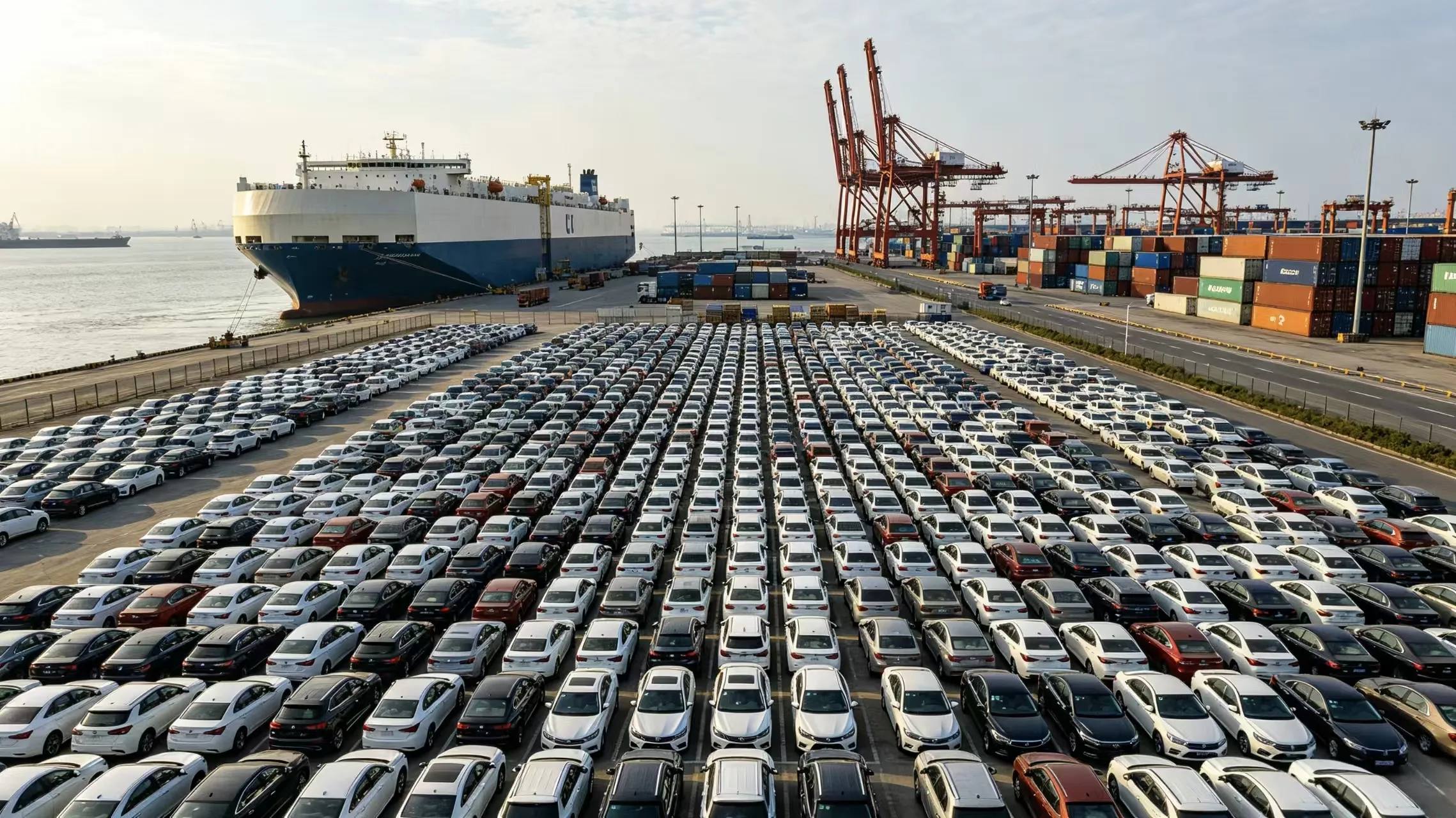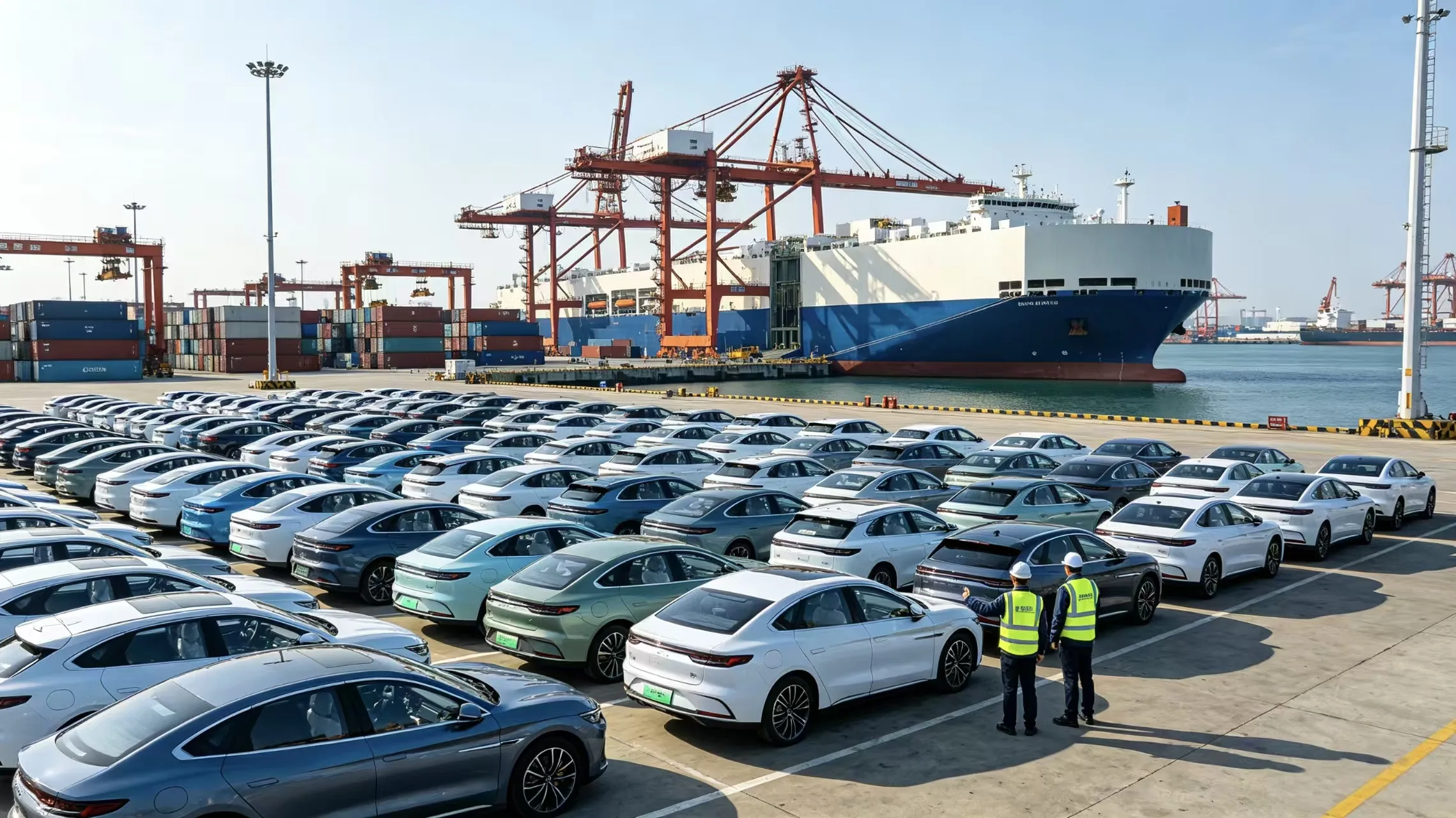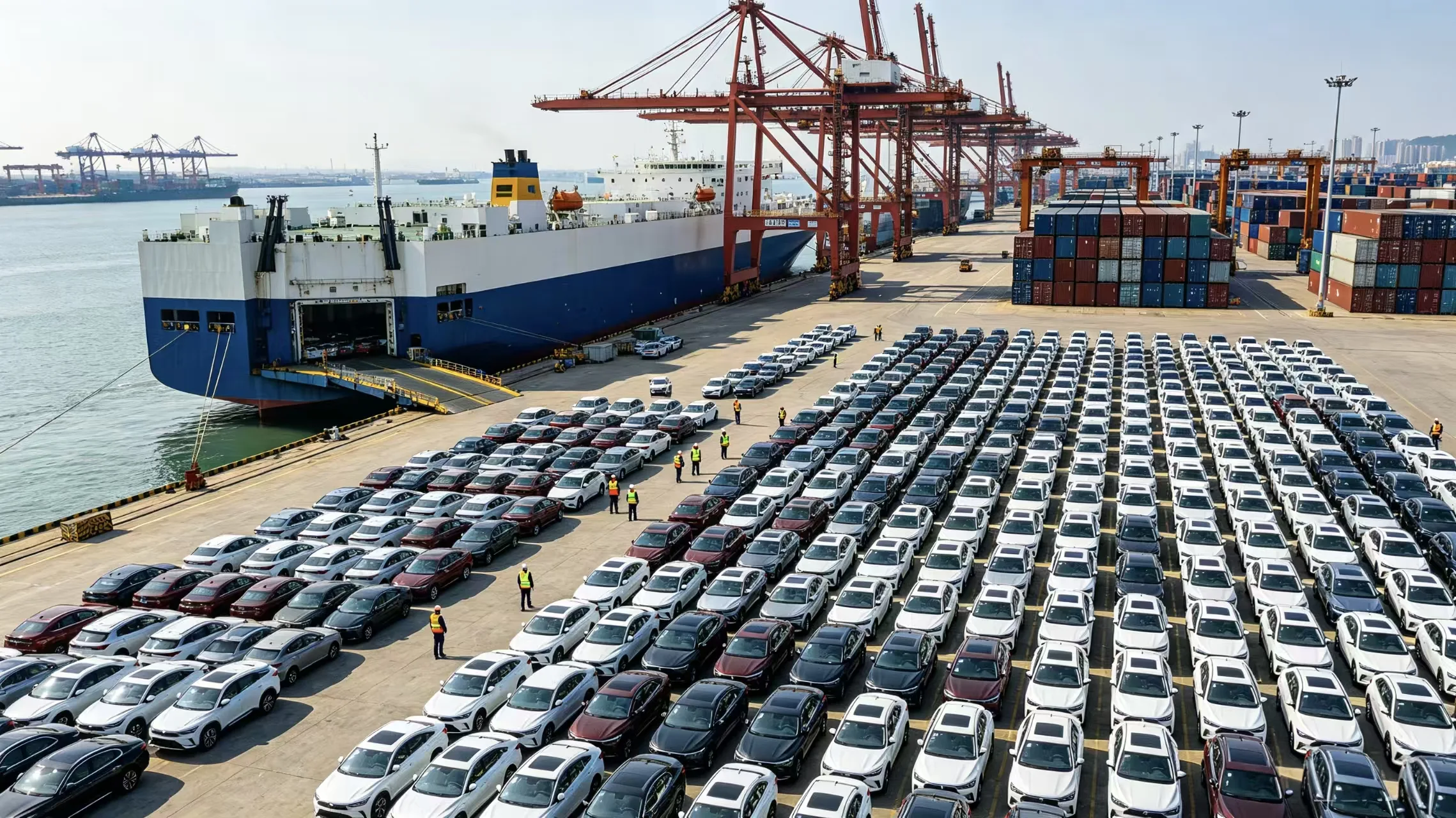
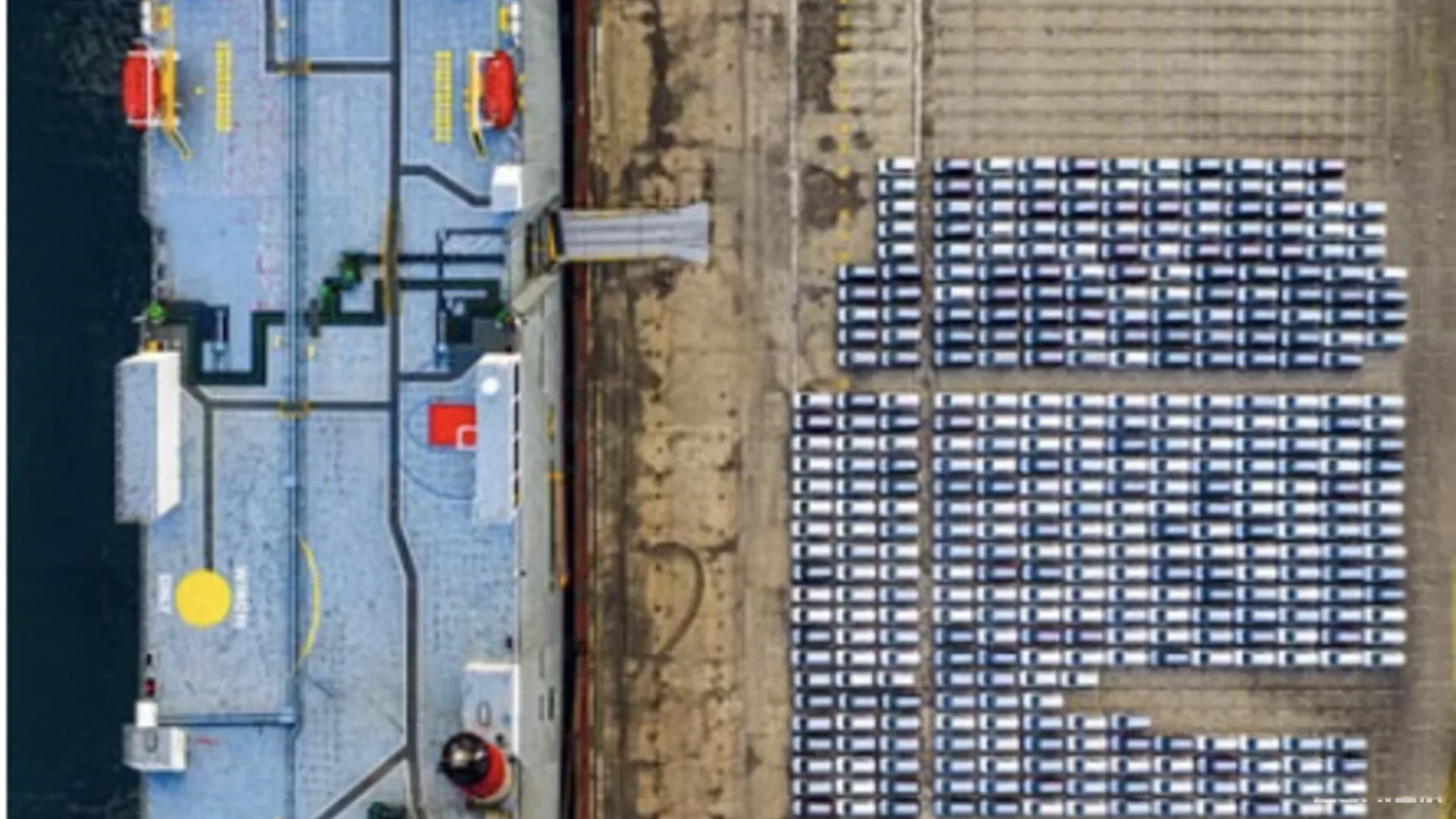
Official industry statistics show China exported over 1.09 million complete vehicles in July. New energy vehicles occupy nearly half of export volume. CIS and Middle East remain the core consumption regions.
📈 1. A Milestone Month: Exports Surpass 1 Million for the Second Consecutive Month
July 2026 marked another historic milestone for China's automotive industry. According to data released by the China Association of Automobile Manufacturers (CAAM) on August 12, China exported 1.043 million vehicles in July, representing a month-on-month increase of 0.6% and a staggering year-on-year surge of 81.3%.
This marks the second consecutive month that China's monthly vehicle exports have exceeded the 1 million unit threshold — a feat no other country has ever achieved. To put this achievement in perspective: in 2020, China's total annual vehicle exports were just 1.08 million units. In July 2026 alone, exports reached 1.092 million units (per General Administration of Customs data) — effectively matching an entire year's worth of exports from just six years ago, in a single month.
Former Vice Minister of Commerce Jiang Yaoping described this as a "historic leap" — a transformation that reflects China's rise from a modest automotive exporter to the undisputed global leader in vehicle trade.
Key Takeaway: For two consecutive months, China has exported more than 1 million vehicles per month — a scale of export volume unprecedented in automotive history.
⚡ 2. New Energy Vehicles Lead the Charge: Over 50% Share for Two Straight Months
The most striking feature of July's export data is the dominant role of new energy vehicles (NEVs). In July, China exported 553,000 NEVs — a month-on-month increase of 5.7% and an extraordinary year-on-year surge of 145.5% (1.5-fold increase).
NEVs accounted for 53.0% of total vehicle exports in July — meaning more than one out of every two Chinese vehicles shipped overseas is now electrically powered. This marks the second consecutive month that NEV exports have exceeded 50% of total exports, a structural shift that underscores China's global leadership in electric mobility.
By comparison, traditional fuel vehicle exports reached 490,000 units in July, up 40% year-on-year but down 4.6% month-on-month — illustrating that the growth momentum is decisively shifting toward electrified powertrains.
For the January-July period, cumulative NEV exports reached 2.909 million units, putting China firmly on track to exceed 5 million NEV exports for the full year.
Industry Milestone: For the first time in automotive history, a major auto-exporting nation is shipping more electric vehicles than combustion engine vehicles overseas — and China has achieved this milestone for two consecutive months.
🏭 3. Leading Automakers: Four Brands Surpass 100,000 Units in a Single Month
July's export boom was driven by strong performances across China's leading automakers, with four manufacturers individually exceeding 100,000 units in overseas sales:
Chery Group — 202,533 units (1st place) Chery continued to lead all Chinese automakers in exports, shipping over 200,000 units in July alone. Exports accounted for 73% of Chery's total monthly sales — the highest export dependency ratio among major Chinese automakers, reflecting Chery's decades-long commitment to international markets spanning Latin America, the Middle East, Southeast Asia, and Africa.
BYD — 180,538 units (2nd place) BYD achieved overseas sales of approximately 181,000 units in July, a year-on-year increase of 124.3%. Exports represented 43% of BYD's total monthly sales. The gap between BYD and Chery has narrowed to approximately 22,700 units, setting the stage for a potential leadership change in the coming months. The BYD Yuan UP was the single best-selling export model, with 43,860 units — the only model to exceed 40,000 units in a single month.
SAIC Group — 142,000 units (3rd place) SAIC, a veteran of China's export landscape, shipped 142,000 units overseas in July, up 72.5% year-on-year. Exports accounted for 42% of SAIC's total sales. The MG brand continues to enjoy strong brand recognition and customer loyalty in Europe, while new energy models are accelerating the company's overseas transition.
Geely Auto — 106,663 units (4th place) Geely delivered the most explosive growth among the top four, with exports surging 202% year-on-year to 106,663 units — a new all-time high and the second consecutive month above 100,000 units. The driving force behind Geely's surge was its new energy vehicle exports, which skyrocketed 616% year-on-year. The Geely Xingyuan led the charge with 22,000 units exported, ranking as the top-selling export model within Geely's portfolio.
💰 4. Volume and Value Rise Together: Export Value Growth Catches Up
A particularly encouraging sign for the industry is that export growth is no longer purely volume-driven — value is rising in tandem. According to data from the General Administration of Customs, China's vehicle export value reached $110.8 billion in the first seven months of 2026, a year-on-year increase of 55%.
This marks a significant shift: export value growth has now caught up with and surpassed volume growth, indicating that Chinese vehicles are commanding higher average prices in global markets — a reflection of improving product quality, brand recognition, and the shift toward higher-value new energy vehicles.
The "volume-price dual rise" trend suggests that Chinese automakers are successfully moving beyond price competition and establishing genuine value propositions in international markets.
🔗 5. What's Driving the Surge: The Complete Industrial Chain Advantage
CAAM representatives attribute China's export momentum primarily to the country's complete automotive industrial chain — an end-to-end ecosystem that spans from lithium processing and battery manufacturing to electric motors, electronic control systems, and intelligent connected vehicle technologies.
Several interconnected factors are driving the export boom:
Complete Supply Chain Dominance: China controls the world's most comprehensive NEV supply chain, from raw material processing to cell manufacturing to pack integration — giving Chinese automakers unmatched cost efficiency and production flexibility.
Product Competitiveness: Chinese new energy vehicles now offer industry-leading range, intelligent driving features, and smart cockpit experiences at price points that traditional automakers cannot match — creating compelling value propositions for global consumers.
Channel and Brand Building: Years of investment in overseas dealership networks, after-sales service infrastructure, and localized marketing are beginning to yield dividends, with brands like MG, Chery, BYD, and Geely establishing genuine recognition in key markets.
Overseas Manufacturing Expansion: The accelerating construction of overseas production facilities — in Hungary, Thailand, Brazil, Russia, and beyond — is helping Chinese automakers navigate tariff barriers, shorten delivery times, and deepen local market integration.
Policy Support: Consistent government support for NEV development, export facilitation, and international cooperation has created a stable and enabling environment for Chinese automakers to expand globally.
🌍 6. Cumulative Strength: January-July Data Reinforces the Trend
The July data is not an isolated spike — it represents the continuation of a powerful year-long trend:
- January-July total vehicle exports: 6.14 million units (CAAM), up 66.8% year-on-year
- January-July total vehicle exports (Customs): 6.399 million units, up 53.7% year-on-year
- January-July NEV exports: 2.909 million units
- January-July export value: $110.8 billion, up 55% year-on-year
At this pace, China is on track to exceed 10 million vehicle exports for the full year 2026 — a figure that would have been unimaginable just a few years ago and would cement China's position as the undisputed global automotive export powerhouse.
🚀 7. Conclusion: A New Era of Global Automotive Leadership
July 2026's export data is more than a set of impressive numbers — it represents a fundamental reordering of the global automotive landscape. China is no longer merely a low-cost manufacturing base for vehicles; it has become the world's most dynamic, innovative, and voluminous automotive exporter, with new energy vehicles at the forefront of this transformation.
The consecutive months of 1 million+ exports, the over-50% NEV share, the four automakers exceeding 100,000 units each, and the rising export value collectively signal that China's automotive globalization has entered a mature, sustainable phase — one driven by product excellence, technological leadership, and deep market integration rather than temporary price advantages.
The Bottom Line: July 2026 confirmed that China's vehicle export dominance is not a passing trend — it is a structural reality. With electrification leading the charge, a complete industrial chain powering growth, and Chinese brands establishing genuine global recognition, the era of Chinese automotive leadership in global markets has definitively arrived.