Auto Trade | Used Car Export | International Logistics
📋 1. Introduction: Why Standardization Defines Success in Used Vehicle Exports
China's used vehicle export industry has undergone a remarkable transformation. From a modest beginning of approximately 10,000 units exported in 2020, the sector has grown into a significant component of China's automotive trade — with 325,000 used vehicles exported in the first half of 2026 alone, generating $7.6 billion in export value, representing year-on-year growth of 61% in volume and 54% in value.
Yet this rapid growth has also brought the need for greater standardization and regulatory clarity. In November 2025, China's Ministry of Commerce, Ministry of Industry and Information Technology, Ministry of Public Security, and General Administration of Customs jointly issued the Notice on Further Strengthening the Management of Used Vehicle Exports, which took effect on January 1, 2026. This landmark policy represents a deliberate shift from "volume growth" to "quality excellence" — establishing a comprehensive framework that ensures used vehicle exports are conducted legally, transparently, and with verifiable quality standards.
For overseas traders and B2B buyers, understanding this standardized operational framework is not merely a matter of regulatory compliance — it is the foundation of building trustworthy, sustainable, and profitable used vehicle supply chains from China.
Industry Context: The 2026 policy framework is not restrictive regulation — it is a quality upgrade initiative. By eliminating irregular practices such as "zero-kilometer used cars" (new vehicles fraudulently declared as used), the policy creates a more transparent, predictable, and trustworthy market for genuine used vehicle exports.
🏛️ 2. The 2026 Regulatory Framework: Core Policy Requirements
The Notice on Further Strengthening the Management of Used Vehicle Exports establishes several core requirements that define the standardized operation of used vehicle exports in 2026 and beyond.
The 180-Day Registration Rule
The most significant policy change is the 180-day registration requirement, designed to prevent new vehicles from being fraudulently exported under the guise of used vehicles:
- Effective January 1, 2026, any vehicle applying for export with a registration date of less than 180 days (inclusive) must submit an "After-Sales Maintenance Service Confirmation" issued by the vehicle manufacturer.
- This confirmation document must include: the export destination country, vehicle information, details of after-sales service outlets in the target market, and must bear the official seal of the vehicle manufacturer.
- Vehicles that cannot provide this documentation will not be issued an export license.
- For vehicles that had already completed transfer registration before the policy took effect but were awaiting export, enterprises are guided to fulfill existing contracts and export in an orderly manner.
Practical Impact: The classic "buy new → register → export as used within days" model has been effectively closed. Genuine used vehicles with more than 180 days of registration can be exported normally, while near-new vehicles require explicit manufacturer authorization and after-sales commitment — ensuring that every exported vehicle has legitimate service support in the destination market.
Standardized Export License Application
- All declared information must be completely consistent with the Motor Vehicle Registration Certificate — discrepancies will result in license application rejection.
- Export licenses are vehicle-specific, with VIN numbers matched to registration documents.
- The application process is conducted through the Ministry of Commerce's unified business system platform.
Modified Vehicle Compliance
- Modified vehicle exports must provide authenticity certification materials.
- Modified vehicles must be listed in the Ministry of Industry and Information Technology's Road Motor Vehicle Manufacturers and Products Announcement and must pass national mandatory product certification (CCC).
- This prevents unauthorized or unsafe modifications from being exported.
Enterprise Dynamic Management and Negative List
- A dynamic enterprise management mechanism has been established, with authorities conducting interviews and requiring rectification for non-compliant behavior.
- The Negative List of Dishonest Behaviors in Used Vehicle Exports identifies seven categories of violations, including providing false vehicle condition information and failing to conduct export business in accordance with regulations.
- Enterprises on the negative list face restrictions on export license issuance and potential loss of export qualification.
🏢 3. Enterprise Qualification and Market Access
Before any vehicle can be exported, the trading enterprise must first obtain the necessary qualification to conduct used vehicle export business.
Eligible Enterprise Types
Two categories of enterprises may apply for used vehicle export qualification:
Trading / Distribution Companies
- Must be a domestic independent legal entity
- Must have fixed business premises
- Must employ certified vehicle appraisers with social security records
- Must provide financial audit reports
- Must submit an overseas sales plan and compliance commitment letter
Vehicle Manufacturers
- Must be enterprises listed in the Ministry of Industry and Information Technology's vehicle manufacturer announcement
- May only export used vehicles of their own brands
Application Process
- Online submission: Enterprises apply through the Ministry of Commerce's unified business system platform
- Provincial review: The provincial department of commerce reviews and approves the application
- Qualification grant: Upon approval, the enterprise obtains used vehicle export operating qualification
- Annual maintenance: Qualified enterprises must maintain compliance standards and are subject to dynamic management review
Key Point for Overseas Buyers: Working with a properly qualified export enterprise ensures that every transaction is backed by legitimate licensing, verifiable documentation, and accountability under Chinese regulatory frameworks — significantly reducing the risk of customs issues, documentation fraud, or supply chain disruption.
🔄 4. Standardized Operational Process: Step-by-Step Guide
A standardized used vehicle export transaction follows a well-defined sequence of steps, each with specific requirements and quality control checkpoints.
Step 1: Vehicle Sourcing and Verification
- Enterprises source used vehicles through authorized channels, including domestic dealerships, auction platforms, and direct consumer purchases.
- Each vehicle's identity is verified against the Motor Vehicle Registration Certificate, confirming VIN, registration date, ownership history, and any accident or lien records.
- Certified appraisers conduct initial condition assessment, documenting mileage, mechanical condition, cosmetic status, and any existing modifications.
Step 2: Vehicle Preparation and Inspection
- Export-bound vehicles undergo comprehensive reconditioning to ensure they meet destination market standards.
- A pre-export inspection is conducted, covering:
- Safety performance: Brake system testing, steering alignment, tire condition, lighting functionality
- Emissions compliance: Verification that the vehicle meets the destination country's emission standards (e.g., Euro IV/V equivalent)
- Safety equipment: Confirmation of required features such as ABS, airbags, seat belts
- Electrical systems: Battery health, wiring integrity, electronic component functionality
- Exterior and interior: Documentation of cosmetic condition, ensuring no undisclosed damage
- For modified vehicles, additional verification of MIIT listing and CCC certification is required.
Step 3: Export License Application
- The enterprise submits an export license application through the Ministry of Commerce platform.
- Required documentation includes:
- Motor Vehicle Registration Certificate
- Vehicle purchase invoice or ownership transfer documentation
- Pre-export inspection report
- For vehicles registered less than 180 days: manufacturer-issued After-Sales Maintenance Service Confirmation
- For modified vehicles: authenticity certification and MIIT/CCC verification
- The declared information must match the registration certificate exactly.
- Upon approval, the export license is issued, authorizing the specific vehicle (by VIN) for export.
Step 4: Customs Declaration and Logistics
- The enterprise or its authorized customs broker submits the export declaration to China Customs.
- Required documents include: export license, commercial invoice, packing list, bill of lading/waybill, and certificate of origin.
- Logistics options:
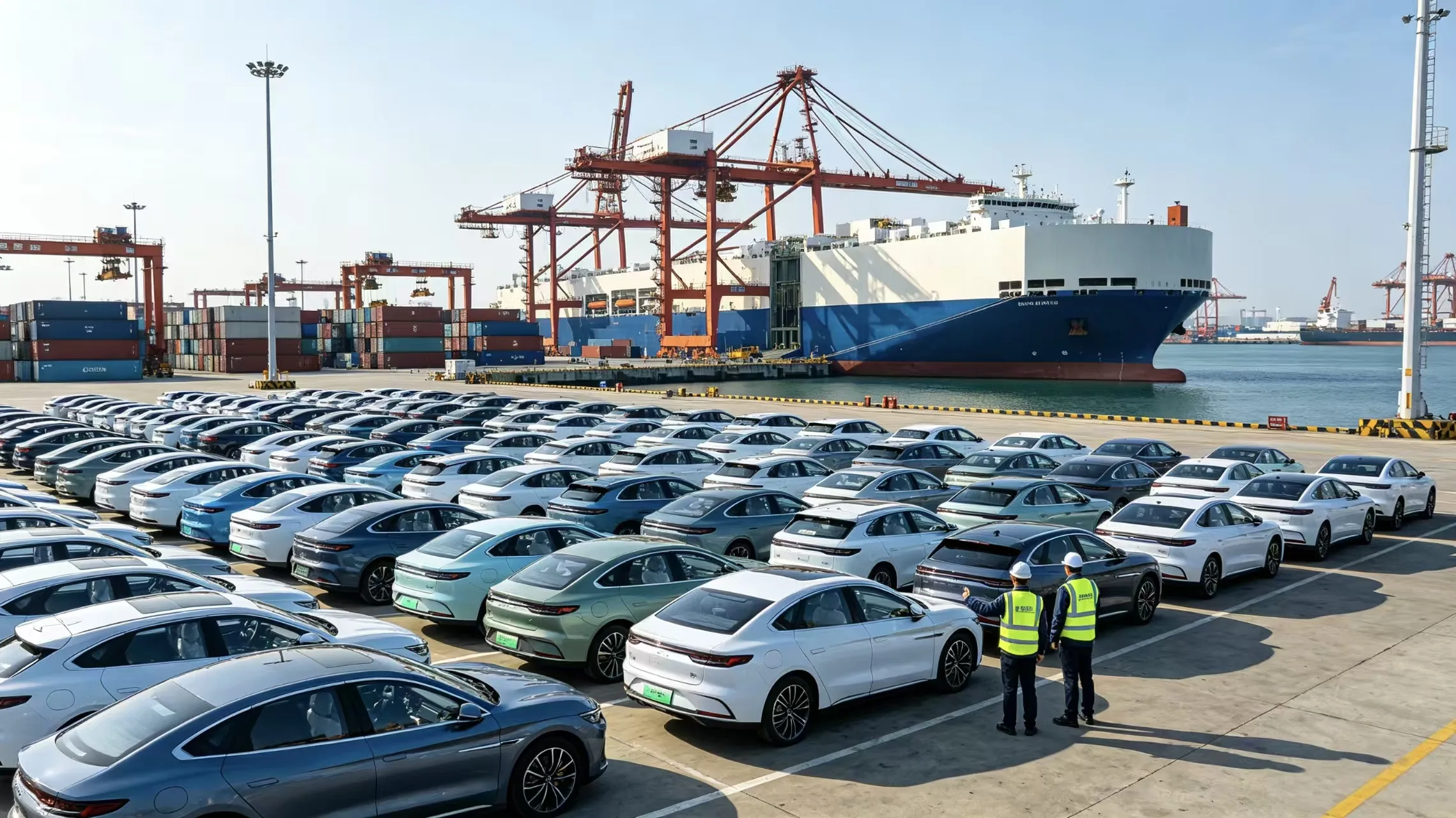
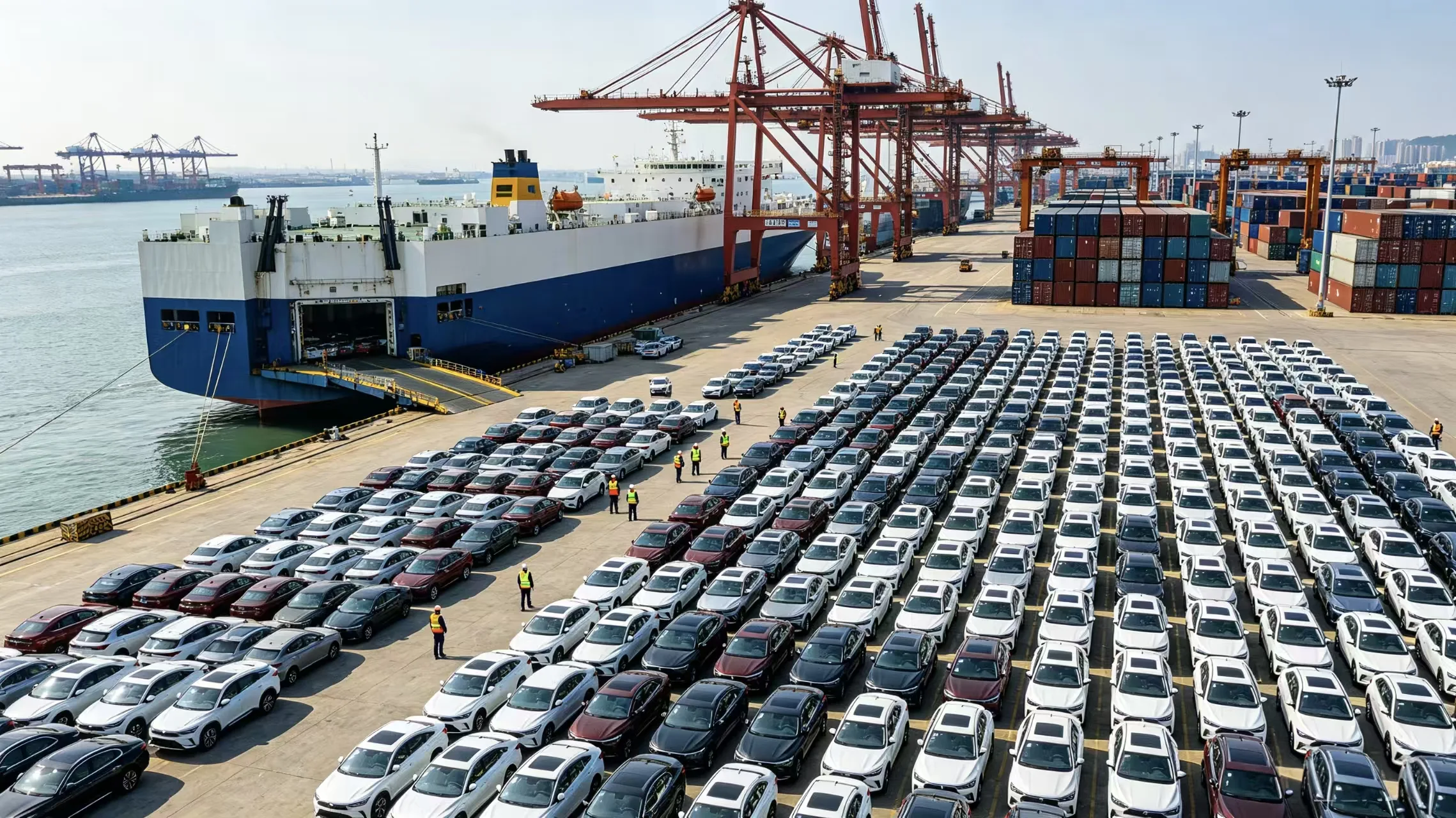
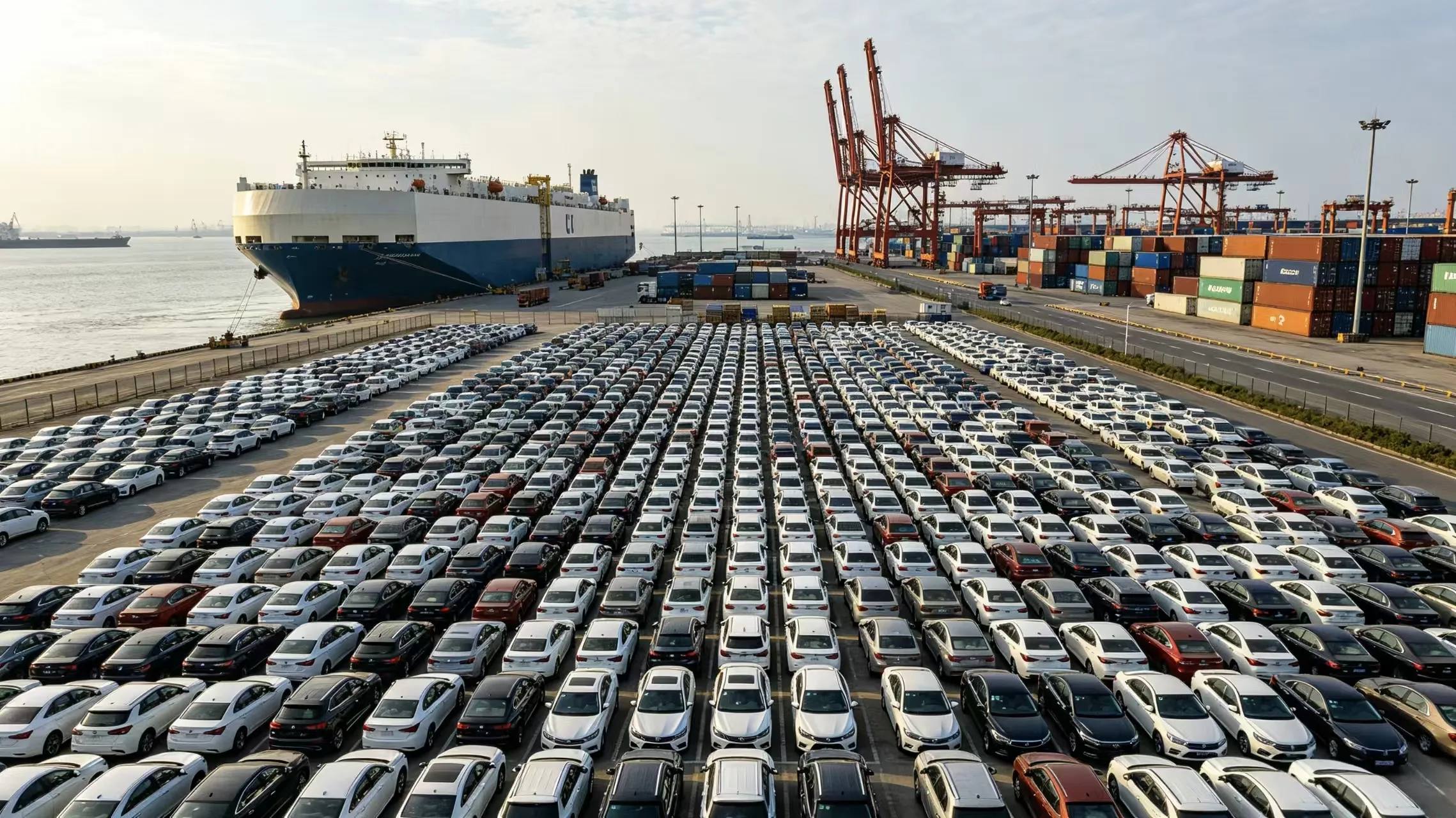
- Ro-ro shipping: Preferred for bulk vehicle shipments, offering efficient loading/unloading, lower cost, and minimal vehicle damage
- Container shipping: 40HQ containers for individual or small batches, with proper vehicle securing and protection
- Marine cargo insurance (typically 1-2% of vehicle value) is strongly recommended.
- After shipment, the arrival report must be submitted within 3 days to avoid compliance issues.
Step 5: Destination Country Clearance and Delivery
- The overseas buyer or their agent handles import customs clearance in the destination country, using the Chinese export documentation and any required destination market certifications.
- Vehicle registration and licensing in the destination country follow local procedures.
- For vehicles covered by manufacturer after-sales confirmation, the designated service network provides warranty and maintenance support.
🔍 5. Quality Control and Certification: Building Trust Through Verification
Standardized operation places strong emphasis on verifiable vehicle quality — a critical factor in building long-term trust with overseas buyers.
Pre-Shipment Inspection Standards
Every export-bound used vehicle should undergo a systematic inspection that covers:
- Identity verification: VIN matching across all documents, confirmation of no tampering or alteration
- Mechanical condition: Engine performance, transmission smoothness, suspension integrity, brake effectiveness
- Safety systems: Airbag functionality, ABS operation, seat belt condition, structural integrity (no undisclosed frame damage)
- Electrical systems: Battery health, alternator output, lighting, infotainment, power windows and locks
- Emission compliance: Verification that the vehicle meets the destination country's required emission standard
- Cosmetic documentation: Detailed photographic record of exterior and interior condition, including any scratches, dents, or wear
Third-Party Certification and Testing
- EMC (Electromagnetic Compatibility) testing: Required for certain markets, with certification being VIN-specific and cannot be transferred from new vehicle approvals.
- Destination market certifications: Depending on the target country, additional certifications may be required, such as SONCAP for Nigeria, GCC standards for Middle Eastern markets, or national type approval for various countries.
- Independent inspection reports: Many reputable exporters provide third-party inspection reports from recognized agencies, offering an additional layer of quality assurance for overseas buyers.
The Value of Transparent Vehicle History
- Standardized operation encourages full disclosure of vehicle history, including:
- Number of previous owners
- Service and maintenance records (where available)
- Accident history
- Mileage verification
- This transparency directly addresses concerns about odometer fraud and undisclosed damage — issues that have historically plagued the international used vehicle trade.
Quality Standard for Premium Markets: In markets like Dubai, which serves as a global re-export hub, only used NEVs within 3 years of age with low mileage are accepted. Local consumers value authentic maintenance records and original factory condition — vehicles with odometer fraud or undisclosed accident damage are directly rejected and may result in claims. This demonstrates how standardized quality practices align with the expectations of high-value markets.
🌍 6. Major Export Markets: Characteristics and Entry Requirements
China's used vehicle exports serve a diverse range of global markets, each with distinct characteristics, demand profiles, and regulatory requirements.
Africa: The Fastest-Growing Market
Africa represents the most dynamic growth opportunity for China's used vehicle exports:
- Market scale: Africa has a population of 1.4 billion, with only 23 vehicles per 1,000 people — and approximately 90% of vehicles on the road are used imports.
- Growth trajectory: China's used vehicle exports to Africa are projected to reach 450,000 units in 2026, a year-on-year increase of 35% — the fastest growth rate globally.
- Key markets: Nigeria, Ghana, and Kenya collectively accounted for 20.1% of export share in the first half of 2026, making West Africa the strongest growth segment. Tanzania and Egypt are also significant destinations.
- Policy support: China's retail tariff policies for 53 African countries have been implemented in Nigeria, Ghana, and Kenya, significantly reducing import costs.
- Typical vehicle profile: 3-5 year old vehicles, with price ranges typically between $4,000 and $8,000, prioritizing durability, fuel efficiency, and availability of spare parts.
- Certification: Nigeria requires SONCAP (Standards Organization of Nigeria Conformity Assessment Program) certification, with pre-shipment verification mandatory.
Middle East: Premium Quality Segment
The Middle East, particularly the Gulf states, represents a higher-value segment with stringent quality expectations:
- Dubai as a re-export hub: The UAE serves as a critical transshipment center for used vehicles across the region and beyond.
- Quality expectations: The market primarily accepts used NEVs within 3 years of age with low mileage, prioritizing authentic maintenance records and original factory condition.
- Consumer behavior: Buyers are sophisticated and quality-conscious — odometer fraud or undisclosed accident damage results in direct rejection and potential claims.
- Certification: GCC Standardization Organization (GSO) standards apply, with specific requirements for thermal resilience (operation above 50°C), sand and dust protection (IP67-rated electrical systems), and solar radiation resistance.
Southeast Asia: Proximity and Trade Agreement Advantages
- Left-hand drive markets: Vietnam and Laos represent growing destinations, benefiting from RCEP tariff reductions.
- Logistics advantage: The China-Laos Railway has significantly reduced logistics costs for landlocked Southeast Asian markets.
- Market preference: Consumers favor compact, fuel-efficient vehicles with good availability of after-sales parts.
Central Asia and Russia: Established Demand
- Russia and Central Asian markets continue to be significant destinations for used Chinese vehicles, with established trade routes and consumer familiarity with Chinese brands.
- EAC certification and OTTC requirements apply for vehicles entering the Eurasian Economic Union.
🛠️ 7. After-Sales Support and Ecosystem Development
The 2026 regulatory framework places renewed emphasis on after-sales support — recognizing that sustainable used vehicle exports require more than just shipping vehicles; they require ongoing service infrastructure.
Manufacturer-Backed After-Sales for Near-New Vehicles
- For vehicles exported within 180 days of registration, the mandatory After-Sales Maintenance Service Confirmation ensures that the original manufacturer explicitly authorizes the export and commits to providing after-sales support in the destination market.
- This confirmation includes specific information about service outlets, spare parts supply, and warranty coverage — providing overseas buyers with verifiable service commitments rather than vague promises.
Building Overseas Service Networks
- Reputable used vehicle exporters are increasingly establishing or partnering with overseas service networks, particularly in high-volume markets across Africa, the Middle East, and Southeast Asia.
- These networks provide:
- Routine maintenance and repair services
- Spare parts supply and warehousing
- Technical training for local mechanics
- Warranty claim processing
- The integration of training, financing, logistics, and after-sales support creates a comprehensive ecosystem that elevates used vehicle exports from a transactional business to a sustainable service model.
Spare Parts Availability
- A critical factor in used vehicle market success is the availability of affordable spare parts.
- Chinese vehicle brands benefit from the global expansion of their parts supply chains, making maintenance more accessible in destination markets.
- Standardized exporters often provide parts catalogs and sourcing support to overseas buyers, ensuring that vehicles remain serviceable throughout their lifecycle.
📈 8. Market Data and Growth Trends: 2026 Performance and Outlook
The standardized regulatory environment has not hindered growth — it has channeled it toward more sustainable, higher-quality expansion.
First Half 2026 Performance
- Export volume: 325,000 units, up 61% year-on-year
- Export value: $7.6 billion, up 54% year-on-year
- Share of total vehicle exports: Used vehicles accounted for 6.4% of China's 5.096 million total vehicle exports in the first half — indicating significant room for growth as the used vehicle segment matures.
- Regional growth: Exports to Africa grew most rapidly, with Nigeria, Ghana, and Kenya leading the expansion. Jining city in Shandong province reported 80.3% growth in used vehicle exports to Africa in the first half.
Growth Drivers
Several factors are driving the sustained growth of China's used vehicle exports:
- Growing domestic vehicle parc: China's rapidly expanding vehicle fleet generates an increasing supply of quality used vehicles available for export.
- New energy vehicle transition: As Chinese consumers accelerate their adoption of NEVs, a growing number of well-maintained fuel vehicles and early-model NEVs enter the used market, creating export opportunities.
- Emerging market demand: Developing economies across Africa, Southeast Asia, and Latin America have strong, unmet demand for affordable, reliable used vehicles.
- Policy support: Government policies, including tariff preferences for African nations and the standardized regulatory framework, create a more stable and predictable export environment.
- Investment growth: China's new direct investment in Africa grew 44% year-on-year in the first quarter of 2026, supporting broader economic engagement that facilitates vehicle trade.
Outlook for 2026 and Beyond
- Full-year 2026 used vehicle exports are on track to significantly exceed 2025 levels, with Africa remaining the primary growth engine.
- The shift from "zero-kilometer" quasi-new vehicles to genuine, higher-mileage used vehicles is creating a more sustainable and differentiated product offering.
- As quality standards and after-sales infrastructure continue to improve, Chinese used vehicles are expected to gain market share in higher-value segments, including the Middle East and eventually parts of Eastern Europe.
⚠️ 9. Compliance Risks and Best Practices for Overseas Traders
For overseas traders engaging with China's used vehicle export market, understanding compliance requirements and following best practices is essential for smooth, risk-free transactions.
Common Compliance Risks
- Documentation discrepancies: Any mismatch between declared information and the Motor Vehicle Registration Certificate will result in export license rejection and shipment delays.
- 180-day rule violations: Attempting to export near-new vehicles without the required manufacturer confirmation will result in license denial.
- Modified vehicle non-compliance: Exporting modified vehicles without proper MIIT listing and CCC certification is prohibited.
- False vehicle condition: Providing inaccurate mileage, accident history, or mechanical condition information violates the negative list and can result in enterprise penalties and shipment holds.
- Destination market certification gaps: Failing to obtain required destination market certifications (such as SONCAP for Nigeria) will result in customs clearance failures at the destination.
Best Practices for Overseas Buyers
- Verify exporter qualification: Confirm that your supplier holds valid used vehicle export qualification issued by Chinese authorities.
- Request complete documentation: Ensure you receive the export license, commercial invoice, packing list, certificate of origin, and pre-export inspection report for every vehicle.
- Verify VIN consistency: Cross-check the VIN across all documents and physically on the vehicle to prevent identity fraud.
- Understand the 180-day rule: For vehicles registered less than 180 days, confirm that the manufacturer's After-Sales Maintenance Service Confirmation has been obtained and that after-sales support is available in your market.
- Require inspection reports: Request third-party or standardized pre-export inspection reports with detailed photographic documentation of vehicle condition.
- Confirm destination market requirements: Verify all import certifications, emission standards, and registration requirements in your destination country before placing orders.
- Use secure payment terms: For new supplier relationships, use letters of credit or escrow services to mitigate payment risk until trust is established.
- Build long-term partnerships: Working with established, compliant exporters on a repeat basis ensures consistent quality, reliable documentation, and priority access to inventory.
The Standardization Advantage: In a market historically associated with information asymmetry and quality uncertainty, China's 2026 standardized framework creates a level of transparency and accountability that benefits both exporters and overseas buyers. By working within this framework, traders can build sustainable businesses based on verifiable quality, legitimate documentation, and reliable after-sales support — rather than competing on price alone.
🚀 10. Conclusion: Standardization as the Foundation of Sustainable Growth
The standardized operation of China's used vehicle exports represents a maturation of the industry — a deliberate evolution from an early-stage, volume-driven market to a regulated, quality-focused, and internationally competitive trade sector. The 2026 regulatory framework, with its 180-day registration rule, standardized licensing, modified vehicle compliance, and enterprise dynamic management, has created a more transparent, predictable, and trustworthy environment for all participants.
For overseas traders, this standardization is not a barrier — it is an opportunity. By engaging with properly qualified exporters, demanding verifiable documentation and inspection reports, and understanding the regulatory requirements of both China and destination markets, traders can build reliable, profitable, and sustainable used vehicle supply chains. The growing demand across Africa, the Middle East, Southeast Asia, and beyond, combined with China's expanding vehicle parc and improving quality standards, positions the used vehicle export sector for years of continued growth.
The Bottom Line: Standardized operation is the essential foundation of successful used vehicle exports from China. It ensures legal compliance, verifiable quality, transparent documentation, and reliable after-sales support — the very elements that transform one-time transactions into long-term, trust-based business relationships in the global used vehicle marketplace.